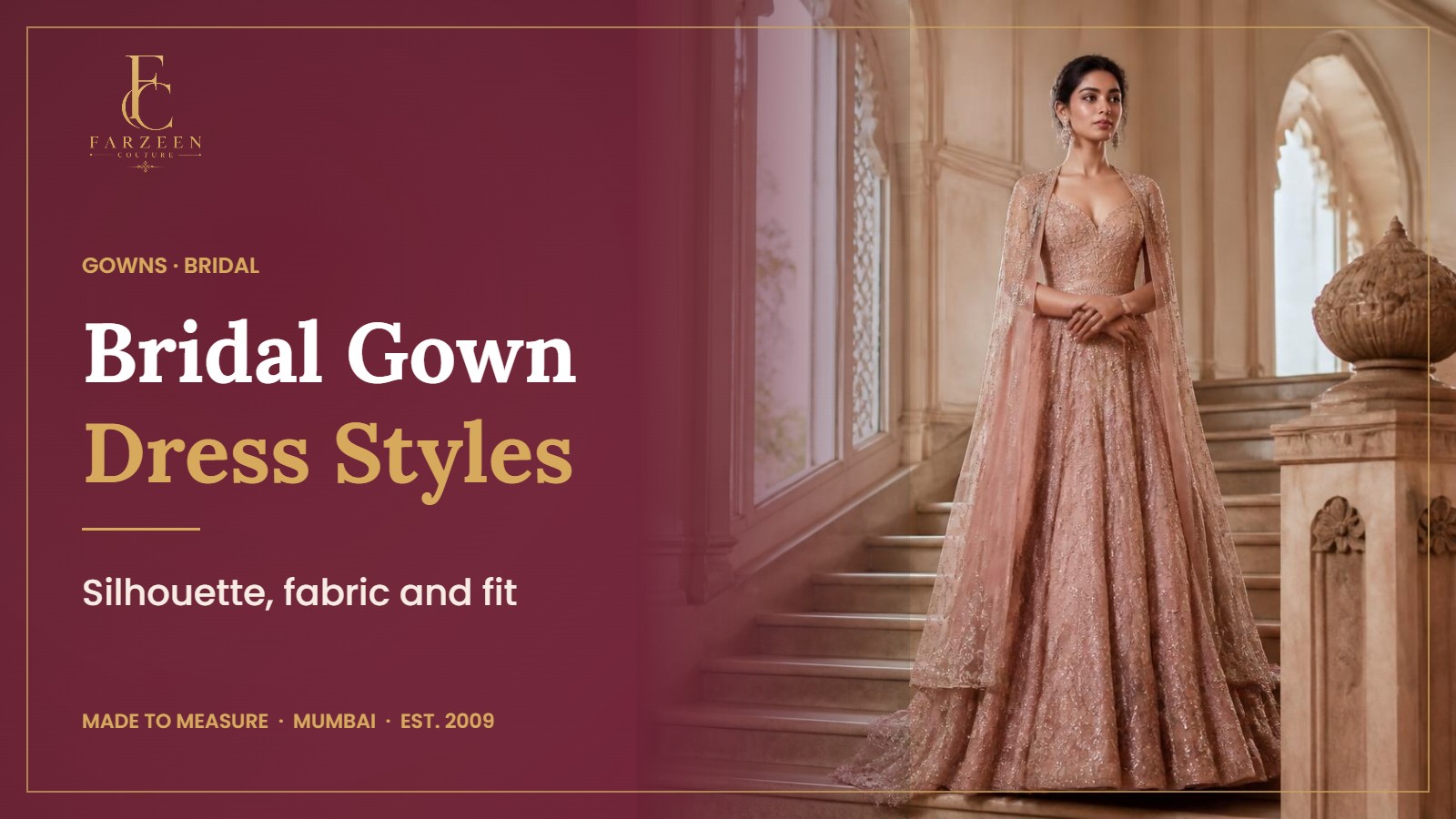
Bridal Gown Dress Styles: How to Choose Yours
Gowns
By Farzeen Lala · Published
You have found a bridal gown dress you love online, but the questions keep coming. Will this silhouette suit my body? Will I be able to sit, dance and walk down the aisle in it? Is ivory better than white for my skin? A wedding gown is one of the most personal outfits you will ever wear, and the right choice starts with understanding the shapes.
This guide explains the main bridal gown styles, which body types and venues they suit, and how to choose the fabric, neckline and details so the gown feels made for you.
Who Wears a Bridal Gown?
A bridal gown is the main outfit for a Christian or church wedding, and many brides choose one for a civil ceremony, a destination wedding or a reception. More and more Indian brides also wear a gown for the reception or cocktail evening after a traditional ceremony. If your gown is for the reception, our reception gown guide covers that evening in detail. This guide focuses on the wedding gown itself.
The Main Bridal Gown Silhouettes
The silhouette is the overall shape of the gown. It shapes how you look and how you move more than any other detail.
- A-line: a fitted bodice that flares gently from the waist into a skirt shaped like the letter A. It flatters almost every body type, which is why it is the most popular choice.
- Ball gown: a fitted bodice with a full, voluminous skirt. It feels like a fairy tale and suits grand churches, ballrooms and heritage venues. It is especially flattering on pear-shaped figures because the skirt balances the hips.
- Mermaid: fitted through the bodice, waist and hips, flaring at or just below the knee. It highlights curves and suits an hourglass figure and a formal evening.
- Trumpet: similar to the mermaid but flaring from mid-thigh, so it is a little easier to walk and dance in.
- Sheath or column: a slim line that follows the body from shoulder to hem. It suits tall, athletic or straight figures and intimate or destination weddings.
- Empire waist: a raised waistline just under the bust with a soft, flowing skirt. It is comfortable and flattering on apple-shaped figures and works well for garden weddings.
How to Choose the Right Gown for You
- Start with your venue. A cathedral or ballroom can carry a ball gown and a long train; a beach, garden or small ceremony suits a lighter A-line, sheath or empire gown.
- Think about comfort. List what you will do in the gown: walk the aisle, sit through the service, take photos, dance. A mermaid looks stunning but limits movement; an A-line is easy all day.
- Choose the neckline. Sweetheart and off-shoulder necklines show the collarbones and suit most brides; a V-neck lengthens the frame; a high neck or long sleeves give a graceful, covered look for church ceremonies.
- Pick the colour. Pure white suits cool undertones, ivory and off-white suit most skin tones, and champagne or blush tones add warmth. Always check the fabric near your face in daylight.
- Decide on the details. A cape, detachable sleeves, a long veil or a removable train lets one gown change between the ceremony and the party.
Fabrics and Hand Embellishment
Fabric decides how a gown falls and how it feels to wear:
- Satin and mikado: structured and smooth, perfect for clean ball gowns and formal ceremonies.
- Tulle: light and airy layers for volume without heaviness.
- Lace: romantic and classic, often used for sleeves, backs and overlays.
- Chiffon and georgette: soft and flowing, ideal for destination and outdoor weddings.
Hand embellishment is what makes a couture gown special: lace appliqué placed by hand, pearls, crystals, beaded bodices and embroidered borders on the veil. You can see how this craft is done on our Our Craft page.
Veil, Train and the Finishing Touches
The details around the gown complete the look, so plan them together with the gown rather than at the end.
- Veil: a cathedral-length veil adds drama to a church aisle; a shorter fingertip or elbow-length veil is easier for a garden or destination wedding. A veil with a hand-embroidered border can echo the motifs on the gown. Browse our bridal veils for ideas.
- Train: a sweep train just brushes the floor, a chapel train extends a little further and a cathedral train is long and formal. If you want to dance freely later, ask for a bustle or a detachable train.
- Sleeves and capes: sheer sleeves, an off-shoulder drape or a detachable cape add coverage for the ceremony and can be removed for the evening.
- Shoes and hem length: choose your shoes before the final fitting, because the hem is set to their height. Comfortable heels or embellished flats both work when the length is right.
- Jewellery: a sweetheart or off-shoulder neckline suits a statement necklace; a high neckline looks best with earrings alone.
If the same gown will carry you from the ceremony to the party, tell your designer early. Small changes, such as a removable overskirt, can give you two looks from one gown.
Why a Made-to-Measure Bridal Gown Fits Better
Gowns are built close to the body, so fit matters more than in almost any other outfit. A made-to-measure gown is cut on a pattern drawn from your measurements, so the bodice sits correctly, the waist is in the right place and the hem is the right length for your shoes. You also choose the exact neckline, sleeves, colour and amount of embellishment instead of adjusting a ready-made design. Our guide on couture vs ready-to-wear explains when made-to-measure is worth it.
For ideas, browse previous designs such as the Ivory Lace Backless Bridal Gown, the Blush Pink Cape Bridal Gown and more in our bridal and reception gowns.
Frequently Asked Questions
Which bridal gown style suits a petite bride?
An A-line or sheath gown with a V-neck usually suits a petite bride best, because it lengthens the frame without overwhelming it. Very full ball gowns can look heavy on a petite figure unless the skirt is kept light with tulle.
What is the difference between a ball gown and an A-line gown?
Both have a fitted bodice, but a ball gown has a very full, voluminous skirt, while an A-line flares gently from the waist in a simpler shape. A-line is lighter and easier to move in; a ball gown is more dramatic.
Can I get a custom bridal gown made in Mumbai if I live abroad?
Yes. A couture atelier in Mumbai can design a gown with you over video calls, work from measurements taken at home and ship the finished gown worldwide. See how worldwide orders work.
Should I choose white or ivory for my wedding gown?
Ivory flatters most skin tones and looks soft and warm in photos; pure white looks crisp and suits cool undertones. Hold both near your face in daylight before deciding.
Have Your Bridal Gown Made for You
At Farzeen Couture, every bridal gown is designed around you: your silhouette, your fabric, your embellishment and your measurements, made by hand in our Mumbai atelier and delivered worldwide. Share your inspiration through Custom Made Now, book a consultation, or message us on WhatsApp.