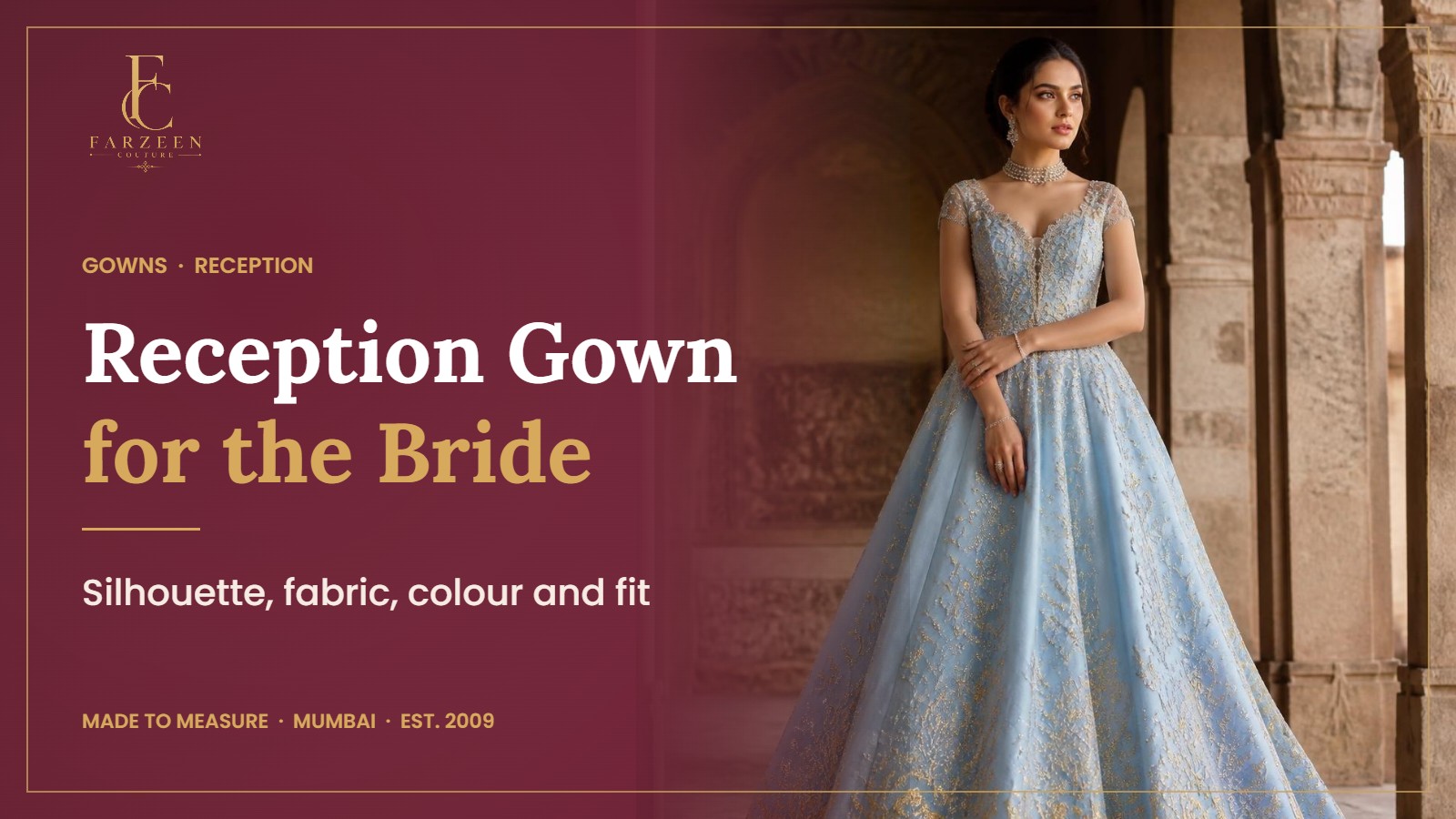
Reception Gown for the Indian Bride: How to Choose
Gowns
By Farzeen Lala · Published
The wedding ceremony is planned down to the last bead, and then someone asks what you will wear to the reception. Many brides want a change of mood for the evening: something lighter to move in, easier to dance in and different from the bridal lehenga, yet still unmistakably bridal.
A reception gown answers that wish beautifully. This guide walks you through silhouette, fabric, colour, embellishment and fit, with a simple checklist and planning timeline, so you can choose a reception gown that feels like you and photographs well from the first entrance to the last dance.
Why Many Brides Choose a Gown for the Reception
The reception is usually the most relaxed function of an Indian wedding. The rituals are complete, the guest list is often the largest, and the evening is about greeting people, dinner, music and photographs. A gown suits this mood for a few reasons:
A clear change of look: after a traditional ceremony outfit, a gown gives you and your guests a fresh moment.
Ease of movement: there is no dupatta to manage, and a well-planned gown lets you stand, sit and dance without constant adjusting.
A modern balance: Indo-Western gowns can carry Indian hand embroidery on a Western shape, so the look stays rooted in tradition.
Strong photographs: a defined silhouette and a flowing train read clearly in stage and portrait shots.
If you are still planning outfits for every event, our guide to the Indian wedding dress code for every function explains what each occasion usually calls for.
Choosing the Silhouette of Your Reception Gown
The silhouette is the outline of the gown, and it decides how the whole look feels. Here are the main shapes, with what each one does best:
Ball gown: a fitted bodice with a full, voluminous skirt. It is the most dramatic and regal choice, ideal for a grand entrance in a large venue. It needs space, so think about how you will sit, walk and greet guests.
A-line: fitted at the top and gently flaring to the hem. It flatters most body shapes and is comfortable for a long evening.
Mermaid and trumpet: close to the body through the hips, then flaring at the knee (mermaid) or mid-thigh (trumpet). Glamorous and striking, but more structured, so a careful fit matters.
Sheath or column: a slim, straight line that follows the body lightly. Elegant and minimal, a good choice for a smaller or more intimate reception.
Cape or drape gown: a gown with an attached cape, a draped panel or a pallu-style drape. It brings an Indian touch to a Western shape and adds movement in photographs.
Think about the venue as well as your figure. A ballroom or lawn can carry a full skirt and a long train, while a restaurant or terrace often calls for a slimmer line. A detachable train is a practical middle path: wear it for the entrance and photographs, then remove it for dinner and dancing.
Fabric and Season
Fabric shapes how the gown falls, how it feels against the skin and how warm it will be. India's main wedding season runs through the cooler months, so many evening receptions are well suited to richer fabrics, while destination and summer events need lighter ones.
Velvet: deep, plush and warm. A natural choice for winter evenings and jewel-toned colours.
Net and tulle: light and airy, with a soft, floating volume. Often layered for ball gown skirts.
Organza: crisp and sheer, holding its shape well. It gives a structured skirt without heavy weight.
Satin and silk: smooth, with a gentle sheen that catches evening light. Good for clean, sculpted silhouettes.
Georgette and chiffon: soft and flowing, ideal for drape gowns and warmer climates.
Ask to see and touch fabric swatches before you decide, and hold them up in the kind of light your reception will have. To see how fabric and handwork come together at the atelier, visit Our Craft.
Colour and Embellishment
The reception is often where brides step away from the traditional red of the ceremony. A few directions to consider:
Champagne, gold and ivory: soft and luminous, and they glow under warm lighting.
Pastels such as blush, powder blue and lilac: fresh and romantic, lovely for a lighter mood.
Jewel tones such as emerald, sapphire, wine and midnight blue: rich and dramatic, especially in velvet for a winter evening.
Silver and metallic tones: festive and celebratory, made for a dance floor.
Embellishment can range from a light scatter to an all-over finish. Crystals and sequins catch stage lights, pearls feel soft and classic, and zardozi or dabka work brings an Indian richness to a Western shape. If you would like to understand these techniques better, read our short guide to zardozi, dabka and beadwork.
One useful rule: let one element lead. A heavily embellished bodice pairs well with a cleaner skirt, and a dramatic skirt pairs well with a quieter neckline. This keeps the gown elegant rather than crowded, and it helps your jewellery stand out too.
Fit, Comfort and Practical Details
A reception can last many hours, so comfort deserves as much thought as beauty. Before you finalise the design, think through these points:
Neckline and sleeves: choose a neckline that you will not need to adjust all night, and think about whether you want sleeves, a cape or a shawl for a cool evening.
Weight: heavy embellishment and many layers add weight. Ask how the weight will be supported, for example through a structured bodice or an inner corset.
Movement: if you plan to dance, discuss skirt volume, train length and whether a bustle or detachable train would help.
Footwear: choose your shoes before fittings so the hem length can be set correctly.
Fittings: a made-to-measure gown is built on your measurements, and fittings fine-tune the shape. Brides ordering from abroad can learn how measurements and trials work in our guide to ordering couture from abroad.
Your Reception Gown Planning Checklist
Use this simple checklist to bring your ideas together before your consultation:
Note the reception date, venue type and whether it is indoors or outdoors.
Save a few reference images of silhouettes and colours you love.
Decide how you want the evening to feel: regal, romantic, glamorous or minimal.
Think about how the gown will sit beside your ceremony outfit and your partner's reception look.
Shortlist two or three colours and ask for swatches.
Choose your level of embellishment and which element will lead.
Plan your jewellery, hairstyle and shoes alongside the gown.
Book your consultation early and keep time for fittings before the wedding.
On timing, a few months before the event is a common starting point in the industry for made-to-measure couture, and detailed handwork needs more time. The atelier confirms the timeline for your gown at your consultation, so the earlier you begin, the calmer the process.
Frequently Asked Questions
Is a gown suitable for an Indian wedding reception?
Yes. Many brides choose a gown for the reception because it offers a fresh look and more ease of movement after the ceremony. Indo-Western gowns with Indian hand embroidery keep the look connected to tradition.
How far in advance should I order a custom reception gown?
It depends on the design and the amount of handwork. In the industry, a few months before the event is a common starting point, and heavier embellishment needs more time. The atelier confirms your timeline at your consultation.
Which fabric is best for a winter reception gown?
Velvet is a popular choice for winter evenings because it is warm and rich in colour. Satin, silk and layered net or organza also work well, depending on the silhouette you want.
Can I order a made-to-measure reception gown from outside India?
Yes. Farzeen Couture makes outfits for clients in India and worldwide. Measurements and design discussions can be handled remotely, and the finished gown is delivered to you.
What decides the cost of a custom reception gown?
The main factors are the fabric, the size of the silhouette, the amount and type of hand embellishment, and design details such as a cape, train or corset. Your quote is prepared after your consultation.
Have It Made for You
At Farzeen Couture, every gown is made to order and shaped to your measurements, from the first sketch to the final hand-finished detail. Explore our couture gowns for inspiration, then tell us about your reception.
Start your design through Custom Made Now or message us on WhatsApp. You can also book a consultation with the atelier in Mazgaon, Mumbai, or from anywhere in the world.