Indian Wedding Dress Code: What to Wear to Every Function
Wedding Guide
By Farzeen Lala · Published
The invitation arrives, and it lists five functions over three days. Suddenly you need an outfit for the mehendi, another for the haldi, something you can dance in for the sangeet, and a look that feels right for the ceremony and the reception, without repeating yourself or getting the mood wrong.
This guide takes each function in turn and explains what people usually wear, which colours and fabrics work, and what to avoid. At the end you will find a simple planning checklist, so you can map out every outfit well before the first event.
Why Every Function Has Its Own Dress Code
An Indian wedding is rarely a single event. It is a series of gatherings, each with its own purpose and mood. Some are intimate and playful, held in the afternoon at home. Others are grand, formal evenings with hundreds of guests. What you wear simply follows that mood.
Customs also differ between regions, communities and families. A Punjabi wedding, a Gujarati wedding and a South Indian wedding can have quite different functions and expectations. Use this guide as a starting point, and when in doubt, ask the family. They will always appreciate that you checked.
Timing and setting matter as well. A morning function in a garden calls for lighter fabrics and softer colours than a formal evening in a hotel ballroom. If the wedding is in a hot climate or outdoors, breathable fabrics will keep you comfortable for hours. For a winter wedding, velvet, heavier silk and an embroidered jacket or shawl add warmth without losing any elegance.
Mehendi: Relaxed, Bright and Easy to Sit In
The mehendi is usually a daytime or early evening function where henna is applied to the bride's hands and feet, and often to guests' hands too. It is cheerful, informal and colourful.
Colours: greens, yellows, oranges and bright pastels are popular choices.
Silhouettes: sharara sets, short kurtas with palazzos, light anarkalis and simple lehengas all work well.
Fabric: choose something light and breathable, since you may sit for a long time while henna is applied.
Practical tip: short or three-quarter sleeves keep fabric away from wet henna on your hands and wrists.
Haldi: Sunny Colours and Washable Fabrics
At the haldi, a turmeric paste is applied to the bride and groom by family and friends. It is joyful and often messy, and turmeric can stain fabric.
Colours: yellow is the traditional choice, with other bright, light shades such as white with yellow details, orange or soft pastels.
Fabric: washable, breathable cotton, linen or light silk is the safest option.
Embellishment: keep it minimal. Heavy embroidery and delicate fabrics are best saved for later functions.
For the bride and groom, a simple outfit made specially for the haldi is a lovely idea, as long as everyone accepts it may end up stained. Guests should also skip anything they would be upset to see marked with turmeric, and keep jewellery simple.
Sangeet: Dressed Up and Ready to Dance
The sangeet is the evening of music, performances and dancing. It is festive and glamorous, and it is usually one of the most photographed nights of the wedding.
For women: lehengas, gowns, sharara sets, saree gowns and Indo-Western sets.
For men: bandhgalas, Nehru jacket sets, kurta sets or Indo-Western jackets.
Colours: jewel tones, metallics and pastels all look good under evening lights.
Movement: choose a silhouette you can dance, twirl and sit in comfortably.
Our sangeet outfit ideas go into more detail for the bride, family and guests.
The Wedding Ceremony: The Most Traditional Look
The ceremony is the heart of the wedding and the most traditional event. Outfits are usually the richest and most formal of the week.
For the bride and groom
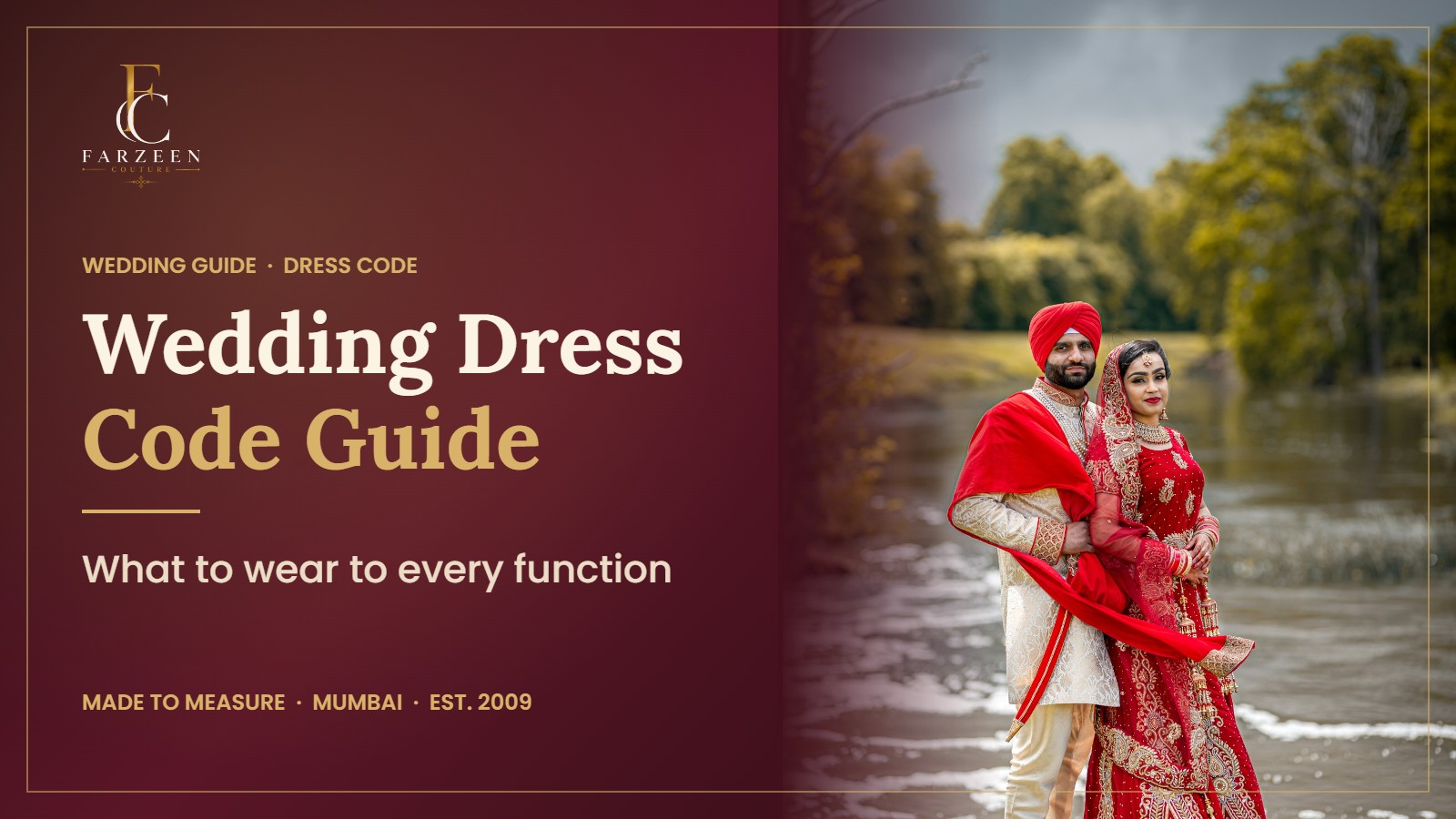
Brides often wear red, maroon, pink or gold, and ivory, sage and blush have also become popular. The groom traditionally wears a sherwani, often in ivory, gold or a tone that complements the bride. Our groom sherwani guide covers how to choose one. Brides who want an outfit made for them can see our custom bridal couture.
For guests
Guests usually wear rich silks, embroidered lehengas, sarees and anarkalis in jewel tones. Men often choose a kurta set, bandhgala or sherwani. Many guests avoid red, as it is commonly the bride's colour, and some families prefer guests not to wear white or black to the ceremony. If you are not sure, ask.
For close family
Parents and siblings often coordinate in colour or embroidery so they look like one family in photographs. This is easier to plan when the outfits are designed together, for example by repeating one embroidery motif or border colour across the mother's saree, the sister's lehenga and the father's bandhgala.
The Reception: Modern and Formal
The reception usually takes place after the ceremony and tends to feel more modern, often in a hotel or banquet hall in the evening.
For the bride: a gown, a saree gown or a lighter embellished lehenga is a popular change from the ceremony look. You can browse ideas in our gowns collection.
For the groom: a tailored bandhgala, a sherwani in a deeper tone or an Indo-Western jacket.
For guests: elegant evening wear, from sarees and lehengas to gowns and bandhgalas.
Because the reception is often the last big event, it is also a chance for the couple to show a completely different side of their style. Many brides choose a lighter colour or a contemporary silhouette here, after a traditional ceremony look.
Your Wedding Outfit Planning Checklist
Planning every look in one go saves stress later. Work through these steps as soon as you receive the invitation.
List every function with its date, time and venue, including whether it is indoors or outdoors.
Check the dress code with the family, including any colours to wear or avoid.
Assign a colour to each function so you do not repeat yourself across the week.
Match the fabric to the setting: lighter fabrics for daytime and heat, richer fabrics for formal evenings.
Order anything with handwork early, because hand embroidery takes time and cannot be rushed.
Plan accessories and footwear together with each outfit.
Think about travel if the wedding is in another city or country, as some fabrics crease more than others.
Try everything on before you pack, including sitting, walking and dancing.
Frequently Asked Questions
What colours should guests avoid at an Indian wedding?
Many guests avoid red, as it is often the bride's colour. Some families also prefer guests not to wear white or black to the ceremony. Customs vary between communities, so it is always best to check with the family.
What should I wear to a mehendi?
Choose something bright, light and comfortable, such as a sharara set, a kurta with palazzos or a simple lehenga. Greens, yellows and pastels are popular, and shorter sleeves help keep fabric away from wet henna.
Can I wear the same outfit to two functions?
You can, especially for smaller functions. Changing the dupatta, jacket or jewellery can make one outfit feel new. Many people still prefer a different look for each event, particularly the ceremony and reception.
What should men wear to an Indian wedding?
A kurta set or Nehru jacket set suits the daytime functions, while a bandhgala or sherwani suits the ceremony and the reception. Our men's couture page shows the styles we make.
How early should I order outfits for a wedding?
It depends on the design and the amount of handwork. Starting a few months ahead is common in the industry, and the atelier confirms your timeline with your quote before you place the order.
Have It Made for You
When you know what each function needs, planning the outfits becomes far easier. At Farzeen Couture, we make bridal, women's and men's outfits to your measurements in our Mumbai atelier and deliver worldwide, so the whole family can be dressed for every event. Share your dates and functions through Custom Made Now or message us on WhatsApp, or book a consultation and we will help you plan the full set.