Groom Sherwani Guide: How to Choose Yours
Men
By Farzeen Lala · Published
Most wedding planning revolves around the bride, and the groom's outfit is often left until the last few weeks. Then come the questions: sherwani or bandhgala, ivory or a deep colour, how much embroidery, and will it still feel comfortable after six hours of rituals and photographs?
This guide answers those questions in order. It walks you through the style, colour, fabric, fit and finishing touches of a groom sherwani, with a simple checklist and planning timeline at the end, so you can arrive at your consultation knowing exactly what you want.
Sherwani, Bandhgala or Achkan: Know the Difference
These three names are often used as if they mean the same thing, but each has its own shape and mood. Knowing the difference helps you choose the right piece for each function.
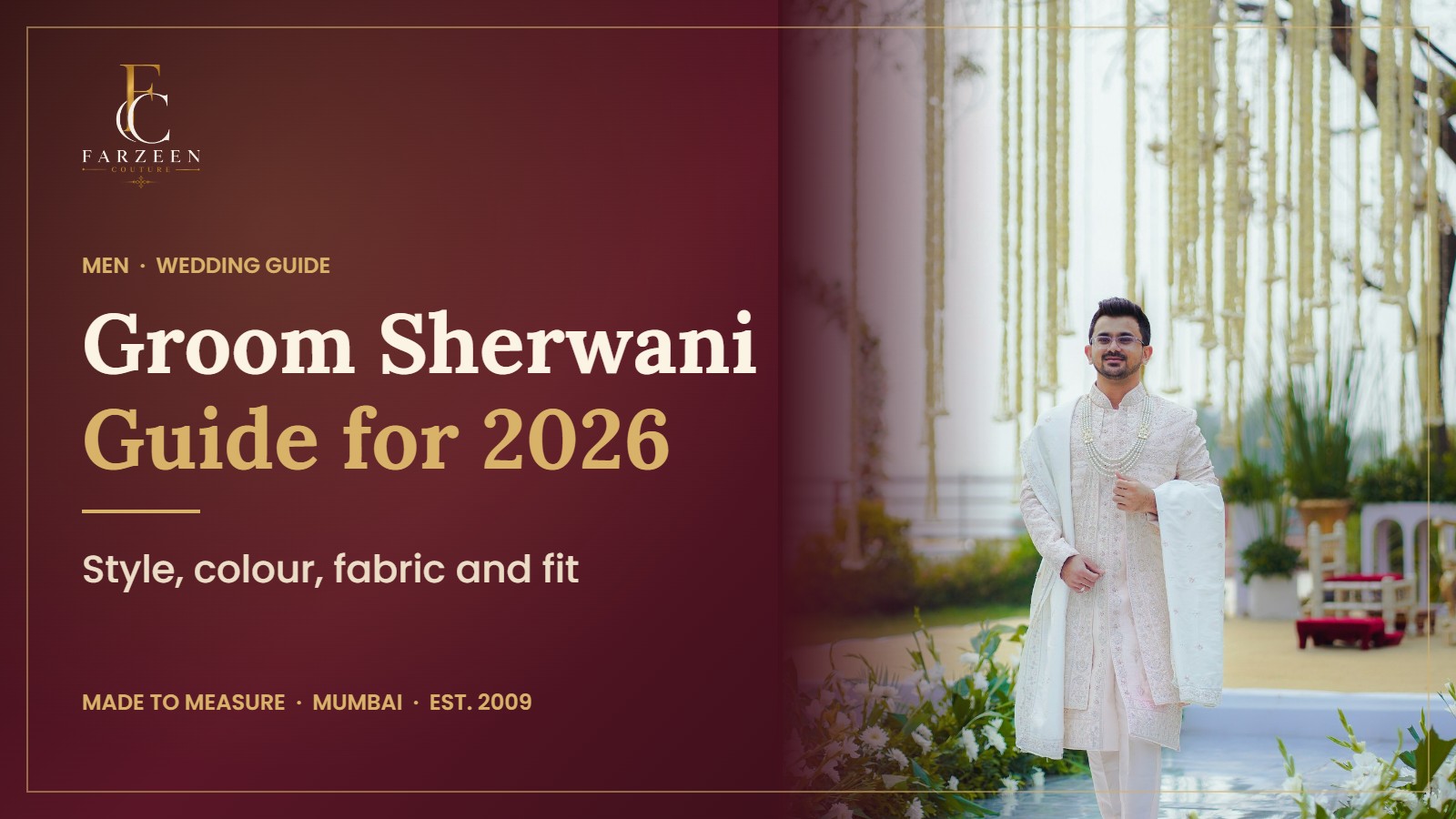
Sherwani: a long, structured coat that usually falls to the knee or below, worn over a kurta with churidar, straight pants or dhoti-style trousers. It is the most formal choice and the classic look for the wedding ceremony itself.
Achkan: also long, but usually slimmer through the body and often quieter in its embellishment. It suits grooms who like a lean, tailored line.
Bandhgala: a shorter jacket with a closed, high collar, worn with trousers. It sits between Indian and Western dressing and works beautifully for the reception, cocktail evening or engagement.
Nehru jacket set: a sleeveless jacket over a kurta. Light and easy to move in, it is a good fit for the mehendi, haldi or sangeet.
Many grooms choose a sherwani for the wedding and a bandhgala or jacket set for the other functions. Our guide to the Indian wedding dress code for every function explains what each event usually calls for.
Choosing the Right Colour for Your Groom Sherwani
Colour sets the tone of your whole look, and it should sit well beside the bride's outfit rather than match it exactly. A few points to think about:
Ivory, cream and champagne: classic for a day wedding and a calm partner to a red or deep-toned bridal lehenga. Soft, pale shades have also been popular with grooms in recent seasons.
Gold and beige: rich without being loud, and they photograph warmly under both daylight and evening lighting.
Deep tones such as midnight blue, bottle green, wine and black: striking for an evening ceremony or reception, especially in velvet.
Pastels such as mint, powder blue and blush: fresh and youthful for daytime and outdoor events.
To coordinate with the bride, pick one shade from her outfit, perhaps the colour of her embroidery or her dupatta border, and repeat it in your safa, stole or pocket detail. This links the two looks in photographs without making them identical.
Skin tone matters too. Hold fabric swatches against your face in natural light before deciding. Some shades bring warmth to your complexion and others can make you look tired, and a swatch shows the difference in seconds.
Fabric and Season
The fabric decides how the sherwani drapes, how it feels and how warm it will be. Choose with the date and venue in mind.
Raw silk: has a subtle texture and holds structure well. A dependable choice for most seasons.
Brocade and jacquard: have the pattern woven into the fabric itself, so they look rich even with very little embroidery.
Velvet: deep, luxurious and warm. Best for winter weddings and evening functions.
Silk blends and lighter weaves: breathe better for daytime, summer or destination weddings in warm climates.
Remember the lining and the inner kurta. A heavy outer coat over a light cotton or silk kurta is much more comfortable than heavy layers all the way through.
Embroidery: How Much Is Right?
A groom sherwani can carry anything from a fine border to embroidery across the whole coat. There is no right amount, only what suits you and the occasion.
Minimal: embroidery only on the collar, cuffs and front placket. Clean, modern and easy to wear again at other weddings.
Balanced: a defined pattern on the chest and hem with a plain body. This is the look many grooms settle on.
All-over: rich handwork across the coat for a traditional, regal look. It photographs beautifully but adds weight.
Zardozi, dabka and threadwork are all popular on menswear. If you would like to understand these techniques before you choose, read our short guide to zardozi, dabka and beadwork. You can also learn how the atelier approaches handwork on our Our Craft page.
Getting the Fit Right
Fit is what separates a sherwani that looks borrowed from one that looks made for you. Because a sherwani is structured, small errors show quickly. Check these points at every fitting:
Shoulders: the seam should sit exactly at the edge of your shoulder, with no droop or pulling.
Chest and buttons: the front should close smoothly with no strain across the buttons when you stand or sit.
Collar: you should be able to slide one finger inside the collar comfortably.
Sleeves: they should end at the wrist bone, so a little of the kurta cuff or your watch shows.
Length: agree on the length with your footwear on, as mojaris or juttis change how the hem sits.
Movement: sit down, raise your arms, bend as if to touch an elder's feet and walk a few steps. A wedding involves all of these.
A made-to-measure sherwani is cut to your own measurements, not a standard size, so these details can be shaped to your body from the start. If you live outside India, a video call can guide you through measuring yourself, and our worldwide orders page explains how this works.
Finishing Touches: Safa, Stole and Footwear
Accessories complete the look and should be planned with the sherwani, not added at the end.
Safa or pagdi: the turban is often tied in a colour that contrasts with the sherwani or echoes the bride's outfit. A brooch or kalgi adds a finishing detail.
Stole or dupatta: draped over one shoulder, it adds colour and a ceremonial feel.
Mala: a pearl or beaded necklace layered over the sherwani is a traditional touch for many grooms.
Footwear: embroidered mojaris or juttis that pick up the sherwani's embroidery colour. Wear them in before the wedding.
Buttons: custom buttons are a small detail that people notice up close.
Your Groom Sherwani Planning Checklist
Timelines vary with the design and the amount of handwork. As a general guide in the industry, many grooms begin a few months before the wedding. At Farzeen Couture, the atelier confirms your timeline with your quote, before you place the order.
List your functions and decide which outfit you need for each.
Save inspiration such as photographs, colours you love and details from the bride's outfit.
Book a consultation to discuss style, fabric and embroidery.
Approve the sketch and fabric before any work begins.
Share your measurements in person or over a video call.
Attend fittings and test the outfit by sitting, walking and bending.
Finalise accessories such as the safa, stole, mala and footwear.
Collect or receive your sherwani with time to spare before the first function.
To see each stage in more detail, read how a couture outfit is made.
Frequently Asked Questions
How far in advance should I order a custom groom sherwani?
It depends on the design and the amount of handwork. In the industry, a few months before the wedding is a common starting point, and heavier embroidery needs more time. The atelier confirms your timeline with your quote, so contact us as early as you can.
Should the groom's sherwani match the bride's lehenga?
It should complement it rather than match it exactly. Pick one shade or detail from the bride's outfit and repeat it in your safa, stole or embroidery so the two looks work together in photographs.
What is the difference between a sherwani and a bandhgala?
A sherwani is a long coat that usually falls to the knee or below and is worn over a kurta. A bandhgala is a shorter jacket with a closed high collar, worn with trousers. The sherwani is more formal, while the bandhgala suits receptions and evening events.
Can I order a custom sherwani from outside India?
Yes. Your sherwani is made in our Mumbai atelier and delivered to you wherever you live. Consultations take place over video call, and you can measure yourself with guidance from the atelier.
What decides the cost of a custom sherwani?
The main factors are the fabric, the amount and type of hand embroidery, the complexity of the cut, and any extra pieces such as a safa, stole or inner kurta. You receive a clear quote after your consultation.
Have It Made for You
Your sherwani should look and feel like it was made for you, because it should be. At Farzeen Couture, every sherwani, bandhgala and jacket set is designed with you, cut to your measurements and finished by hand in our Mumbai atelier. Explore our men's couture, then share your inspiration and wedding date through Custom Made Now or message us on WhatsApp. You can also book a consultation in person or by video call.