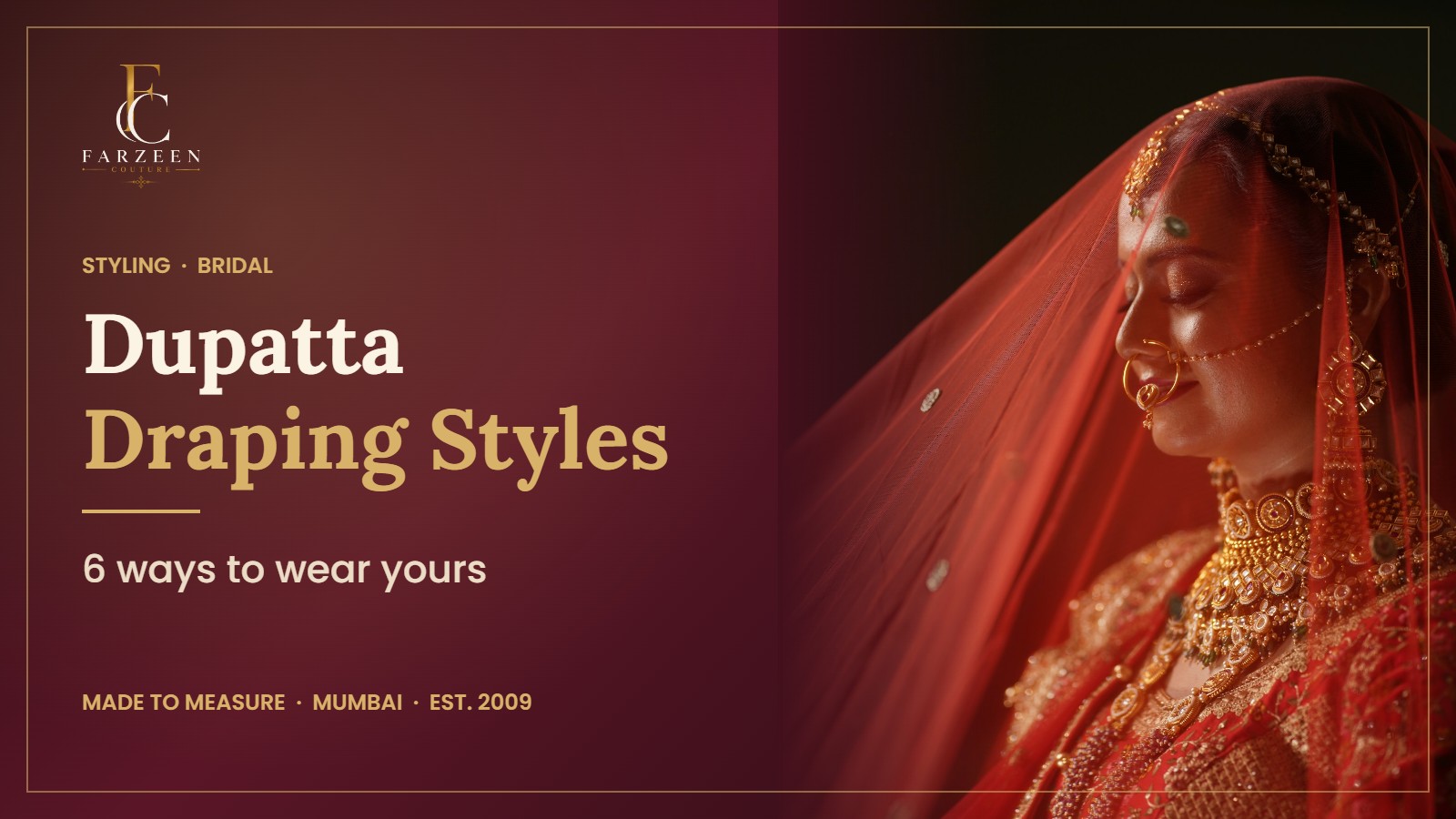
Lehenga Dupatta Draping Styles: 6 Ways to Wear Yours
Styling
By Farzeen Lala · Published
The dupatta changes how a lehenga looks more than most people expect. Worn one way it feels traditional and graceful. Worn another way it looks light and modern. Here are six ways to drape it, how to pin each one, and how to choose the right style for your outfit and your day.
Before You Drape: What You Need
A good drape starts before the dupatta goes on. Keep these ready:
Safety pins and small brooch pins: pins hold the drape in place through a long day. Choose ones that will not snag delicate fabric.
The blouse and skirt already on: always drape over the full outfit, so you can see how the dupatta sits with the neckline and waist.
A mirror and a helper: most drapes are easier with a second pair of hands, especially at the back.
Your jewellery: put on heavy necklaces and earrings first, so the dupatta does not hide or catch on them.
6 Lehenga Dupatta Draping Styles
1. Classic shoulder drape
Pin the dupatta at one shoulder and let it fall down your back, then bring the front end across your body. It works with nearly every lehenga and it is easy to wear for a long day. Best for: weddings, receptions and family functions where you will be on your feet for hours.
2. Both shoulders
The dupatta rests across both shoulders and hangs in front on each side. It frames the neckline, so it is a good choice when the blouse has embroidery you want people to see. Best for: heavily worked blouses and portrait photographs.
3. Saree-style drape
Tuck one end into the waistband, then bring the dupatta across your chest and over the shoulder, like a saree pallu. Pleat the shoulder part neatly and pin it. This gives the dupatta structure, which helps if the fabric is heavy or stiff. Best for: heavier dupattas, and anyone who wants a secure drape that stays put.
4. Cape drape
Drape it around both shoulders and pin it at the back or at the shoulder seams so it falls like a cape. It looks modern and leaves your arms free. Best for: a sangeet or cocktail evening. Our sangeet outfit ideas have more on dressing for a night of dancing.
5. Double dupatta
Two dupattas worn together, often one over the head and one on the shoulder, in matching or contrasting colours. This is common for brides, usually with one sheer dupatta and one richly embroidered one. Best for: the wedding ceremony, when you want a fuller bridal look.
6. Head drape
A veil-style dupatta is placed over the head and falls behind the shoulders. You will see it in many bridal and ceremony looks. Pin it lightly into the hair so it stays without pulling. Lighter fabric is easier to carry this way. Best for: ceremonies, and for brides who want a veil-like frame. You can also explore our bridal veils.
How to Choose the Right Drape
There is no single correct way to wear a dupatta. These points will help you choose:
Fabric: sheer net and organza fall softly and suit head drapes and capes. Heavier silk and velvet hold their shape and suit the saree-style or shoulder drape.
Embroidery: if the blouse or skirt is heavily worked, a plain or lightly worked dupatta lets it stand out. If the outfit is simple, an embroidered dupatta can carry the look.
The function: a ceremony often calls for a fuller, more traditional drape, while a sangeet or reception suits a lighter, freer one.
Movement: think about how long you will wear it and whether you will be sitting, dancing or walking. Choose a drape that lets you move without adjusting it every few minutes.
Your build and height: length and width can be adjusted so the dupatta moves well and does not swamp you.
If you are still choosing the lehenga itself, read our guide to choosing the colour, embroidery and silhouette of your bridal lehenga.
Step-by-Step: A Drape That Lasts All Day
Whichever style you choose, this routine helps it stay neat from the first photograph to the last:
Decide the drape in advance and practise it once with the full outfit on.
Steam the dupatta so the fabric lies flat and folds neatly.
Pin at the anchor points first, usually the shoulder and the waist, before arranging the rest.
Pleat with care. Even pleats at the shoulder look tidy and hold better.
Test it. Sit down, raise your arms and walk a few steps to check nothing pulls or slips.
Keep spare pins with a friend or in your potli for quick fixes.
Common Draping Mistakes to Avoid
Too few pins: a drape that looks perfect in the mirror can slip within an hour. Anchor it properly at the shoulder and waist.
Hiding the best detail: if your blouse or skirt carries the richest embroidery, do not cover it with a heavy drape.
Ignoring the weight: a heavily embroidered dupatta over the head can feel tiring after a long ceremony. Choose a lighter fabric for head drapes.
Forgetting the back view: guests and photographers see you from every side, so check how the dupatta falls behind you too.
Draping on the day for the first time: always practise, so you and whoever helps you know exactly where each pin goes.
Making the Dupatta Fit the Drape
Most dupattas are made to a standard length and width, which is why some drapes never sit quite right. With a made-to-measure lehenga, the dupatta can be designed around how you plan to wear it. Its length, width, border placement and weight can all be decided with you, so a head drape is light enough to carry and a saree-style drape has enough length to pleat.
The border can also be placed so it shows where you want it, along the front of a shoulder drape or around your face in a head drape. You can see more of the atelier's women's work on our women's couture page.
Frequently Asked Questions
Which dupatta drape is best for a bride?
Many brides choose a head drape or a double dupatta for the ceremony, with one sheer and one embroidered dupatta. For later functions, a shoulder drape or cape drape is lighter and easier to move in.
How do I stop my dupatta from slipping?
Pin it at the shoulder and the waist first, then arrange the rest. Pleating the shoulder section neatly helps it hold. A saree-style drape tucked into the waistband is one of the most secure options.
Which drape shows off an embroidered blouse?
The both-shoulders drape and the cape drape keep the front of the blouse visible. A classic shoulder drape also works if you keep the front fall to one side.
Can one dupatta be draped in different ways for different functions?
Yes. A medium-weight dupatta with a good length can be worn as a head drape for the ceremony and as a shoulder or cape drape later. Ask for the length and weight to be planned with this in mind.
Can the dupatta be made to suit my drape?
With a made-to-measure lehenga, yes. The length, width, border and fabric weight can all be chosen to suit how you plan to wear it.
Which lehenga dupatta drape looks slimming?
A drape that makes one long vertical line tends to look the most slimming: the classic one-shoulder drape falling straight down the front, or a saree-style drape pleated narrowly across the body. Avoid bunching a heavy dupatta over both shoulders, and choose a lighter net or georgette dupatta with the embroidery kept to the border. If you are planning your bridal lehenga, the dupatta’s weight and border can be designed around the drape you want.
How do I pin a net dupatta on a lehenga?
Net is light and slips easily, so use small safety pins or U-pins rather than heavy brooches. Pleat the part that sits on your shoulder into narrow folds, pin it to the blouse strap from underneath, then pin a second point at the waist. For a head drape, pin it to your hair with U-pins hidden under the edge so the fabric does not pull.
Have It Made for You
The right dupatta makes the whole lehenga come together. At Farzeen Couture, we design the dupatta with the lehenga, around the way you want to wear it. Share a photograph of a drape you love through Custom Made Now or message us on WhatsApp, or book a consultation and we will help you decide.