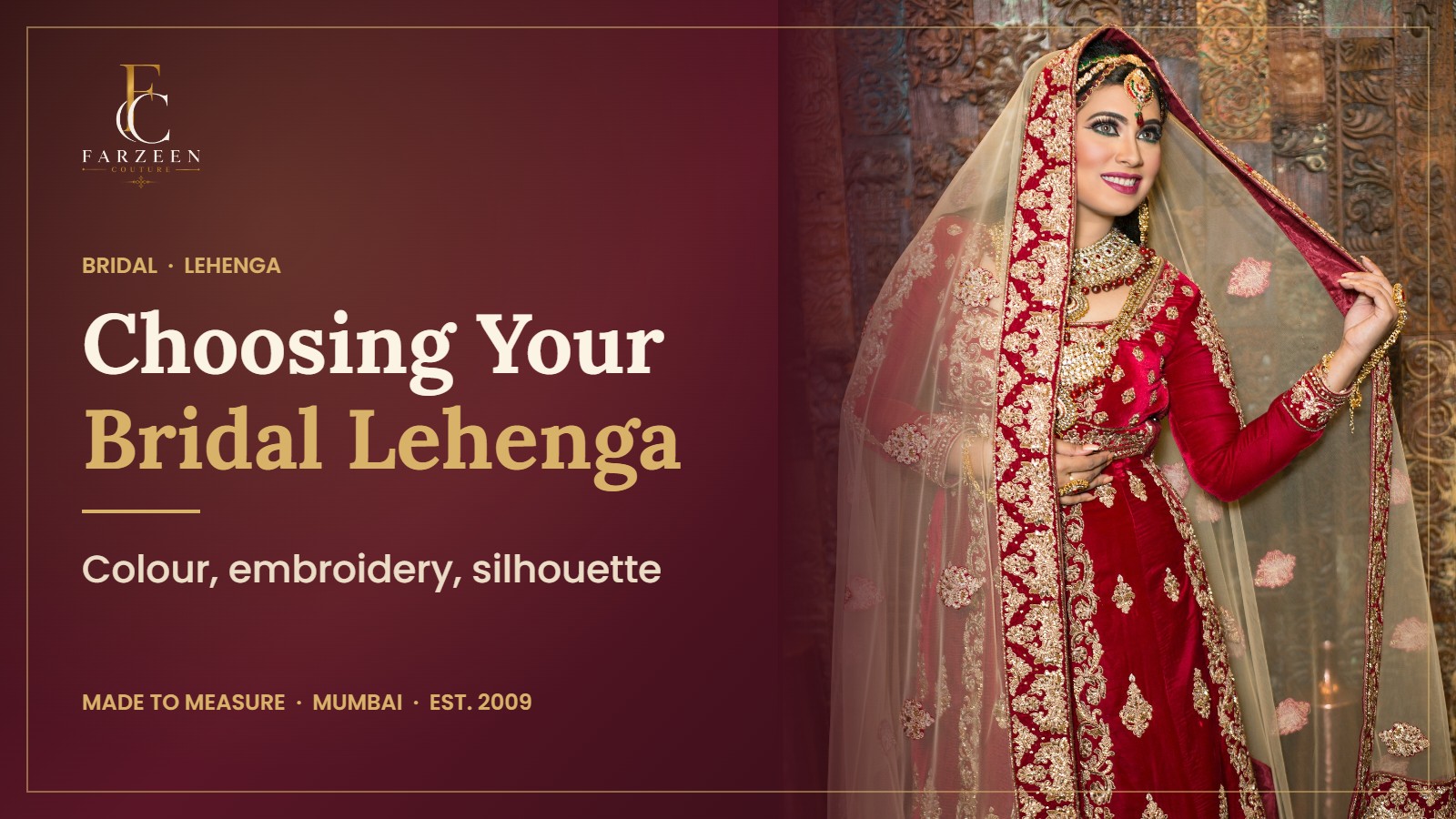
Choosing the Colour, Embroidery and Silhouette of Your Bridal Lehenga
Bridal
By Farzeen Lala · Published
You have saved hundreds of bridal lehenga photos, and every one of them looks perfect until you try to picture yourself in it. Red or ivory? Heavy embroidery or something lighter? A full flare or a slimmer shape? With so many choices, it is easy to feel stuck before you even begin.
A bridal lehenga is the outfit people will remember you in. Since ours are made for one person, almost everything can be decided with you. This guide walks you through the key decisions, colour, embroidery, silhouette, neckline, sleeves and dupatta, in a simple order, so you arrive at your consultation with a clear idea of what you want.
Start with Colour
Red and gold are still the classic pairing for an Indian bride, and they remain a much-loved choice. Many brides now also choose rose gold, ivory, sage, soft blush and other pastel shades. There is no wrong answer, only the shade that feels right for you.
Things to think about when choosing a colour
Skin tone: hold fabric swatches against your face in natural light. Some shades bring warmth to your complexion, while others can make you look tired.
Venue lighting: deep reds and jewel tones glow under warm evening lights, while pastels look fresh in daylight and outdoor settings.
Time of day: a morning ceremony often suits lighter shades, while a night wedding can carry richer colours.
Family traditions: some families and communities have customs about bridal colours, so it is worth asking early.
The groom's outfit: choose shades that sit well together rather than match exactly. Our groom sherwani guide has tips on coordinating.
If you have an exact shade in mind, tell us. We can have the fabric dyed to match.
Decide on Embroidery and Handwork
Embroidery shapes the character of the whole lehenga. Decide how much you want and where it should go. Some brides want the lehenga embroidered from waist to hem. Others prefer a quieter skirt with rich detail on the blouse and border.
All-over embroidery: a traditional, regal look with handwork across the whole skirt. Beautiful, but heavier to wear.
Heavy border: a deep embroidered hem with a lighter body, which gives a grand look while keeping the weight manageable.
Scattered motifs: small motifs spread across the skirt for a softer, more modern feel.
Blouse focus: rich detail on the blouse with a simpler skirt, ideal if you want the attention near your face.
Zardozi, dabka, beading, pearls and crystals each have their own texture. To understand how they differ, read our short guide to zardozi, dabka and beadwork. More handwork needs more time, so tell us your date early.
Choose a Silhouette That Suits You
The shape of the skirt changes how the lehenga looks and how it moves. We shape it around your proportions and around how you plan to wear the outfit through the day.
A-line: fitted at the waist and flaring gently to the hem. It flatters most body types and is easy to walk in.
Flared or circular: a full, voluminous skirt with plenty of movement. It creates the classic bridal twirl.
Mermaid or fishtail: fitted through the hips and flaring near the knee. Dramatic and modern, but more restrictive to move in.
Panelled or kali lehenga: made from many vertical panels that add volume and give space for embroidery along each panel.
Think about how much you will sit, walk and dance on the day. A fuller skirt may need a can-can or extra lining to hold its shape, while a slimmer silhouette is lighter but needs careful fitting.
Neckline and Sleeves
The blouse frames your face, so the neckline and sleeves matter as much as the skirt.
Popular neckline choices
Sweetheart: soft and romantic, and a good frame for a statement necklace.
V-neck: lengthens the neck and suits layered jewellery.
High neck: elegant and covered, often with embroidery around the collar.
Boat neck: a wide, graceful line across the shoulders.
Sleeve options
Short and cap sleeves keep the look light. Elbow-length sleeves are a classic bridal choice and leave room for bangles. Full sleeves give a regal, covered look for a winter or traditional wedding. Sheer sleeves with embroidery give coverage without weight. Choose based on comfort, the season and the jewellery you plan to wear.
Plan for Comfort Through a Long Day
A wedding day can mean many hours of rituals, photographs and greeting guests, so comfort deserves as much thought as looks. Before you finalise the design, think about the following:
Overall weight: heavy embroidery and a full skirt add up. Balance them so the lehenga stays easy to carry.
Waistband and fastenings: a well-fitted, secure waistband spreads the weight and stays in place.
Blouse fit: you should be able to raise your arms, sit and eat without strain.
Hem length: agree the length with your bridal footwear on, so you can walk the pheras without tripping.
At your fittings, sit, walk, turn and lift your arms as you would on the day. Small adjustments made then make a big difference later.
Plan Your Veil and Dupatta
A dupatta or veil finishes the look. Decide whether you want it sheer or embroidered, and whether you will wear it draped, pinned or as a long veil. Many brides wear two dupattas, one over the head and one draped on the shoulder.
We can design the dupatta to go with the lehenga, including its length, width, border and weight. For draping ideas, see our guide to lehenga dupatta draping styles, and explore our bridal veils if you would like a veil instead.
Your Bridal Lehenga Decision Checklist
Use this checklist to organise your thoughts before your consultation:
Note your wedding date, venue and time of day.
Shortlist two or three colours and test them against your skin in natural light.
Choose how much embroidery you want and where it should go.
Pick a silhouette that suits your body and how much you plan to move.
Decide on the neckline and sleeves with your jewellery in mind.
Plan the dupatta or veil, including how you will drape it.
Save a few photographs of looks you love, and note what you like about each.
Book your consultation early, because handwork needs time.
Frequently Asked Questions
What is the most popular bridal lehenga colour?
Red with gold remains the classic choice for Indian brides. Many brides also choose rose gold, ivory, sage, blush and other soft shades, depending on their skin tone, venue and family traditions.
How do I choose a lehenga silhouette for my body type?
An A-line shape flatters most figures and is easy to move in. Flared skirts add volume, while mermaid shapes highlight the waist and hips. A made-to-measure lehenga is shaped around your own proportions, so the designer can guide you.
Can I have my bridal lehenga made in a specific shade?
Yes. If you have an exact shade in mind, the fabric can be dyed to match it as part of a custom order.
How much embroidery should a bridal lehenga have?
It depends on your style and comfort. All-over embroidery looks regal but is heavier, while a worked border or blouse focus gives a lighter feel. Decide where you want attention to fall and plan the handwork around that.
Do I need a complete design before my consultation?
No. Bring a photograph and your date, and the atelier will take you through each decision. The designs on our website are starting points, and each one can be made in your own version.
Have It Made for You
You don't need to have all of this figured out. At Farzeen Couture, every bridal lehenga is designed with you, embroidered by hand and cut to your own measurements in our Mumbai atelier, for brides in India and around the world. Browse our bridal couture for ideas, then share your inspiration and wedding date through Custom Made Now or message us on WhatsApp. You can also book a consultation in person or by video call.