Bridal Lehenga with Double Dupatta: How to Style It
Styling
By Farzeen Lala · Published
You have found the lehenga, but one dupatta cannot seem to do everything. You want a soft veil over your head for the ceremony and a rich drape across your shoulder for the photographs, without feeling buried in fabric. A bridal lehenga with double dupatta gives you both, as long as the two dupattas are planned together from the very first sketch.
This guide explains how a double dupatta works, which fabric belongs where, how to keep the look light, and what to tell your designer so the finished outfit feels comfortable from the first ritual to the last photograph.
What Is a Lehenga with Double Dupatta?
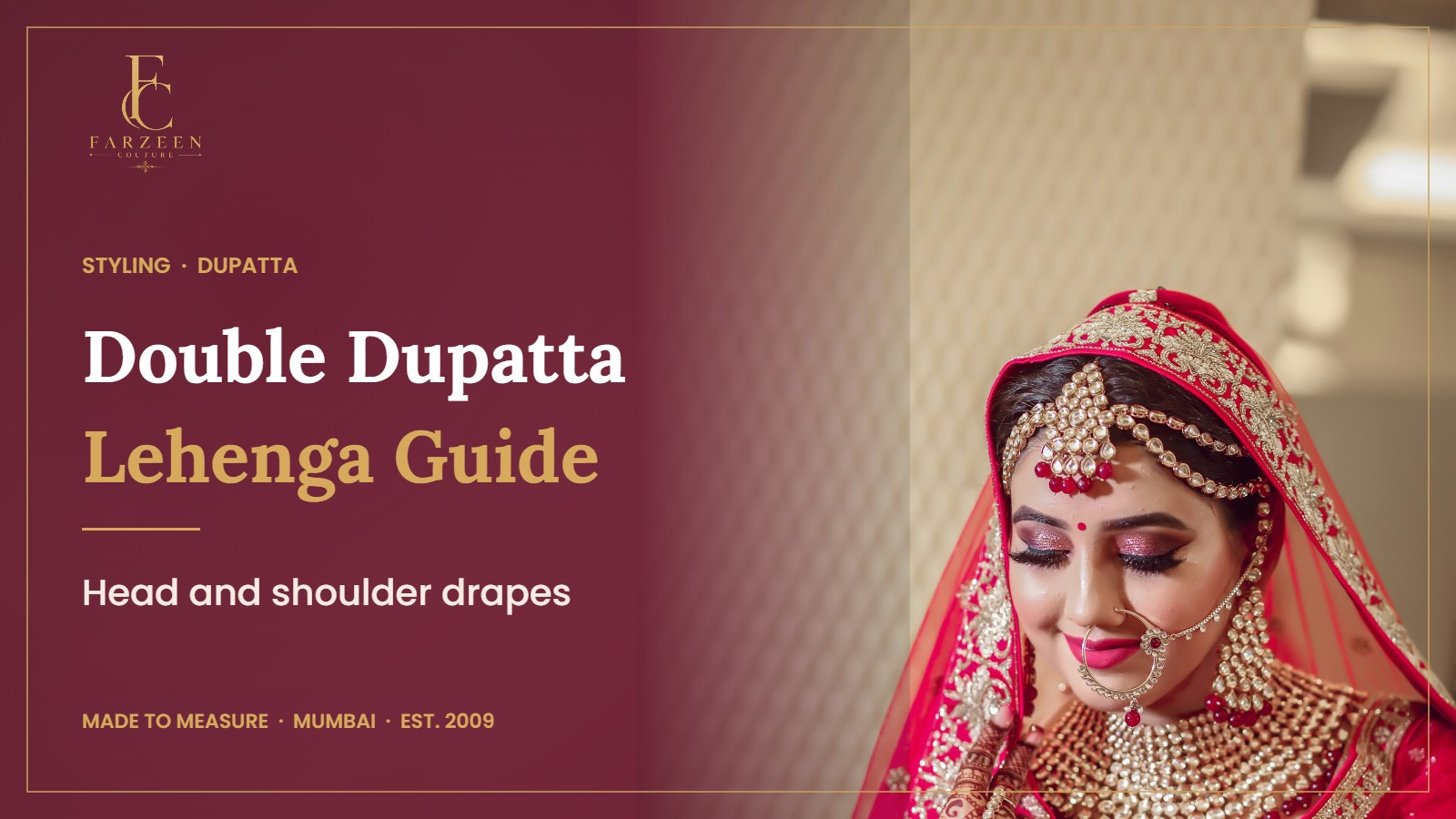
A double dupatta look pairs one lehenga with two dupattas. One is draped over the head, much like a veil. The other is draped across one shoulder, both arms or the back. Each has a different job. The head dupatta frames your face and gives the look its bridal softness. The shoulder dupatta carries colour, texture and embroidery, and shows off the drape of the lehenga.
For a quick overview of single and double drapes, see our lehenga dupatta draping styles. Here we go deeper into how to plan the pair so they work as one outfit.
How the Two Dupattas Share the Work
The easiest way to plan a double dupatta is to give one piece the lead role and let the other support it.
The head dupatta: usually the lighter of the two, in net, tulle, organza or soft georgette, so it sits on the hair without pulling and can be pinned securely. Its border sits close to your face, so a fine, delicate edge often looks better than a heavy one.
The shoulder dupatta: this is where you can bring in more texture, such as silk, raw silk, brocade or velvet. It can be pleated on one shoulder, draped over both arms or worn like a cape at the back.
The balance: if the shoulder dupatta is heavily embroidered, keep the head dupatta lighter with a border only, and the other way round. Two equally heavy dupattas compete with each other and with your jewellery.
Choosing Fabrics That Work Together
Fabric decides how the pair looks in photographs and how it feels after several hours. Use this checklist when you choose.
Keep the head dupatta light. A sheer fabric lets your hairstyle, maang tikka and earrings show through and puts less weight on your head.
Match the shoulder dupatta to the season. Velvet feels right for a winter evening wedding. Silk, organza or a light brocade suits a day ceremony or a warmer city.
Avoid two stiff fabrics. Two crisp layers stand away from the body and can make the upper half look bulky. One should always fall softly.
Think about the lehenga fabric. A velvet skirt often pairs well with a sheer head dupatta and a silk or net shoulder dupatta, so the velvet stays the hero. Our bridal lehenga fabric guide explains how each fabric behaves.
See swatches together. Hold both dupatta fabrics against the skirt in daylight and in warm indoor light before you decide.
Borders, Embroidery and Colour
A double dupatta gives you two chances to play with colour and detail. A few simple rules keep it looking intentional.
Same colour, different weight: both dupattas in the lehenga colour, one sheer and one rich. This is the most classic and calm option.
Tonal contrast: a red lehenga with a blush or ivory head dupatta, or a maroon lehenga with a gold-toned shoulder dupatta. The contrast lifts the face without breaking the outfit.
Border placement: a scalloped or fine border on the head dupatta, and a broader border on the shoulder dupatta that can be seen clearly in full-length photographs.
All-over work on one only: if one dupatta has scattered motifs or butis all over, keep the other to a border.
Personal details: some brides like a meaningful word, initials or a motif on the head dupatta border. Discuss what is possible at your consultation.
If you love the look of a long, sheer head drape, you may also like our bridal veil guide and the bridal veils collection.
Weight and Comfort for a Long Day
A double dupatta should feel graceful, not heavy. Plan for comfort early, not on the wedding morning.
Weight on the head: the head dupatta is held by pins in your hair for hours, so keep it the lighter piece and keep heavy work away from the crown.
Hairstyle first: a low bun gives pins a firm base. Share your hairstyle with your designer and your draper.
Jewellery space: leave room for the maang tikka, passa and earrings so the dupatta does not catch on them. Our guide to bridal jewellery with lehenga can help you plan this.
Walk and sit test: at your final fitting, wear both dupattas, walk, sit and raise your arms. Notice anything that slips or pulls.
Plan the change: many brides remove the head dupatta after the main ceremony and keep only the shoulder drape for dinner and dancing.
Step by Step: How to Drape a Double Dupatta
Every draper has a method, but this order is common and easy to follow.
Finish hair, makeup and head jewellery. The dupatta goes on last so it is not disturbed.
Drape the shoulder dupatta first. Pleat it neatly, pin it to the blouse at the shoulder with a hidden safety pin, and let it fall across the front, back or arm as planned.
Place the head dupatta. Centre it on the head behind the maang tikka and pin it into the bun with U-pins or bobby pins hidden under the fabric.
Set the falls. Let the head dupatta fall softly over the shoulders and over the first dupatta, so the two layers sit one above the other rather than bunching together.
Check from every side. Look in a mirror from the front, side and back, then take a few steps.
Carry a small kit. Keep spare safety pins and U-pins with someone close to you for quick fixes.
Which Functions Suit a Double Dupatta?
A double dupatta is a ceremony look first. It suits the pheras, the nikah, an anand karaj or any ritual where the head is covered and the bride is photographed for a long time. For the reception, you can drop the head dupatta and keep the shoulder drape, which instantly makes the same outfit lighter and more relaxed. For mehendi, haldi or sangeet, a single dupatta, or none, is usually more practical because you will be moving and dancing.
To see how different drapes look on finished pieces, browse our bridal couture, including the Crimson Heritage Lehenga, the Ramayan Maroon Velvet Bridal Lehenga and the Ivory Antique-Gold Lehenga with Veil.
What to Tell Your Designer
When a lehenga is made to measure, both dupattas can be planned around you. Bring these details to your consultation:
Which rituals you will wear the double dupatta for, and whether you plan to remove the head dupatta later.
Your hairstyle and head jewellery, with photos if you have them.
Which shoulder you want the drape on, and whether you prefer it on the arm, the front or the back.
Your height, so the length of each dupatta suits your frame.
Reference images of drapes you love, and any you do not.
Frequently Asked Questions
Can I wear two dupattas with my bridal lehenga?
Yes, you can wear two dupattas with a bridal lehenga, one draped over the head and one across the shoulder or arms. It works best when both are planned with the lehenga, so the fabrics, borders and weight balance each other.
Which dupatta goes on the head in a double dupatta look?
The lighter, sheerer dupatta usually goes on the head. Net, tulle, organza or soft georgette pins easily into the hair and lets your face and jewellery show, while the richer fabric stays on the shoulder.
Is a double dupatta lehenga too heavy to wear all day?
It does not have to be. Keep the head dupatta light, put heavier work on the shoulder dupatta, test both at your final fitting, and plan to remove the head dupatta after the main ceremony if you want a lighter look.
Can I order a bridal lehenga with double dupatta from Mumbai for a wedding abroad?
Yes, a made-to-order atelier in Mumbai can design a lehenga with two dupattas for a bride living abroad, using a video consultation, your measurements and photos of your hairstyle and jewellery. See how worldwide orders work.
Should both dupattas match the lehenga?
Not exactly. Many brides keep one dupatta in the lehenga colour and choose a tonal contrast for the other, such as blush with red or gold with maroon. The aim is harmony, not an exact match.
Have It Made for You
A double dupatta looks its best when the lehenga, both dupattas and your jewellery are designed as one. At Farzeen Couture, every bridal lehenga is made to order and hand-finished to your measurements in our Mumbai atelier, with each dupatta planned for how you will wear it. Start with Custom Made Now or message us on WhatsApp to talk about your design.