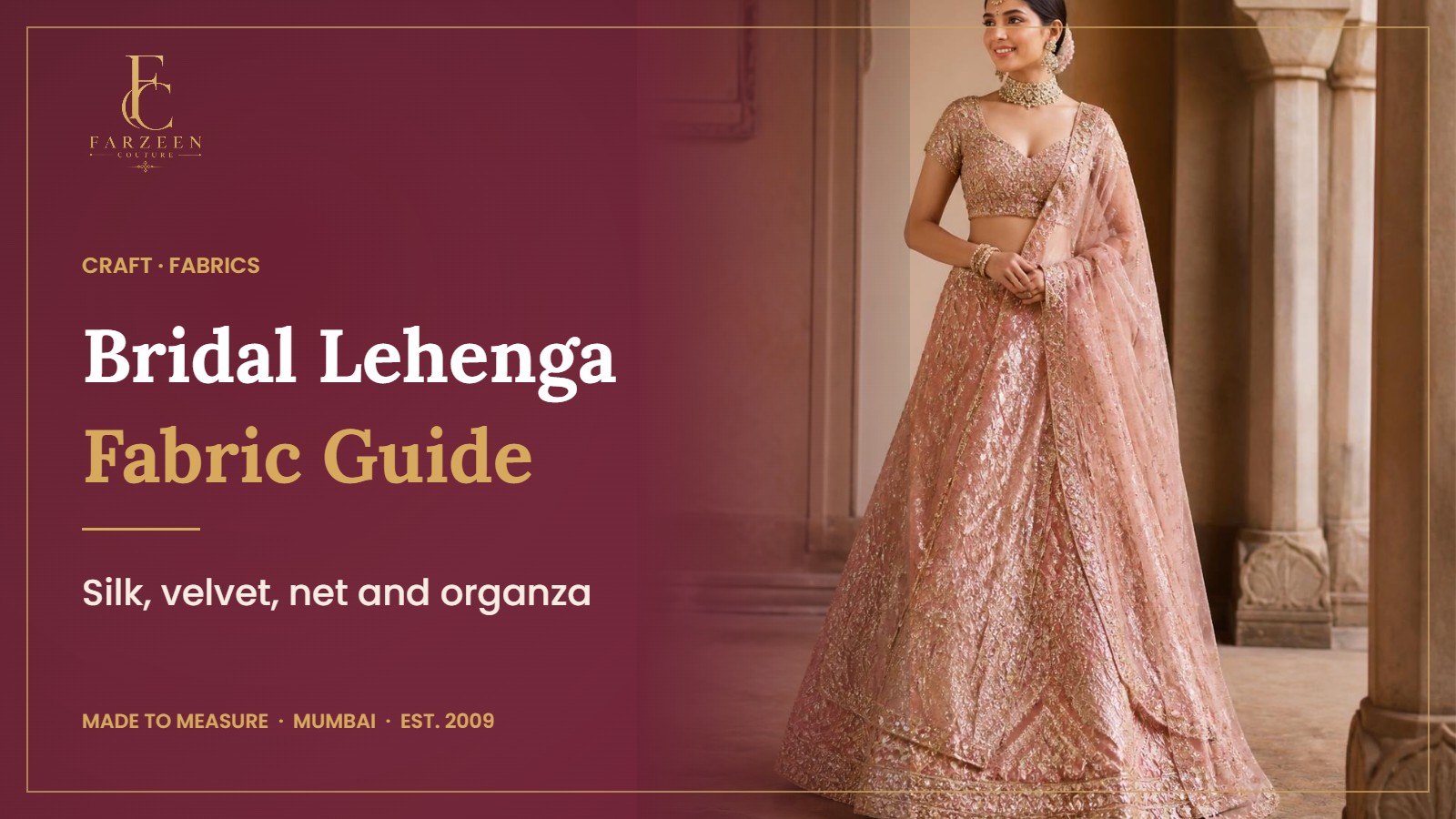
Bridal Lehenga Fabric Guide: Silk, Velvet, Net and More
Craft
By Farzeen Lala · Published
You have decided on the colour and you know roughly how much embroidery you want. Then the designer asks a simple question that stops you: which fabric? Raw silk, velvet, net, organza and georgette all look beautiful in photographs, but they feel, move and wear very differently on the day.
The fabric is the base of your bridal lehenga. It decides how the skirt falls, how heavy the outfit feels after six hours of rituals, how the embroidery sits and how the colour reads in photographs. This bridal lehenga fabric guide explains the main choices in plain words, compares them side by side and gives you a simple way to choose the right one for your wedding.
Why Fabric Matters More Than You Think
Brides often choose fabric last, after colour and embroidery. In a made-to-measure lehenga it works better the other way round, because the fabric shapes almost every other decision.
Silhouette: stiffer fabrics hold a flared or structured shape, while soft fabrics fall close to the body and swing as you walk.
Weight and comfort: the base cloth, its lining and the embroidery together decide how heavy the lehenga feels by the end of the day.
Embroidery: dense zardozi and dabka need a firm base that will not pucker, while light sequins and threadwork sit well on sheer cloth.
Colour: the same dye looks deeper on velvet, brighter on silk and softer on net, because each surface reflects light differently.
Season and venue: a warm, dense fabric suits a cool evening, while an airy one is kinder in daytime heat.
To see how fabric fits into the wider making process, visit our craft page, where every stage from fabric selection to finishing is shown.
The Main Bridal Lehenga Fabrics, Compared
Here are the fabrics brides ask about most, with what each one does well and what to keep in mind.
Raw Silk
Raw silk has a gentle sheen and a slightly textured surface with small slubs in the weave. It is firm enough to hold a structured or panelled skirt and gives embroidery a stable base. It is a classic choice for a traditional bridal look and works across many seasons. Keep in mind that it can crease, so careful storage matters.
Velvet
Velvet has a soft, dense pile that absorbs light, which makes colours such as maroon, emerald and deep red look rich and regal. It feels warm, so it is a natural choice for winter weddings and evening functions. It is also heavier than most other fabrics, and heavy embroidery on velvet adds up quickly, so balance the handwork carefully.
Banarasi Brocade
Banarasi brocade comes from the weaving tradition of Varanasi, with patterns woven into the fabric itself, often with zari. Because the design is already in the weave, it can carry a grand look with less surface embroidery. It suits brides who love a heritage feel and a lehenga that can be treasured as an heirloom.
Net
Net is a light, open mesh. It is usually layered over a lining, and sometimes over a can-can, to build volume. It gives a soft, dreamy look and works well with scattered sequins, cutdana and light threadwork. Net is a popular choice for warm-weather weddings, but it is delicate and can snag on jewellery, so handle it with care.
Organza
Organza is sheer and crisp. It holds its shape better than net, so it can create a full skirt that still feels light. Pastel shades and floral embroidery look especially fresh on organza, which makes it a favourite for daytime and outdoor functions.
Georgette
Georgette is lightweight with a slightly grainy feel and a fluid, flowing drape. It moves beautifully when you walk or dance, which makes it a good choice for the sangeet or mehendi. It does not hold a stiff flare on its own, so it suits softer silhouettes.
Tissue and Chanderi
Tissue fabrics are woven with metallic yarns that give a soft shimmer, and are often used for dupattas and lighter lehengas. Chanderi, a traditional weave from Madhya Pradesh, is light and fine with a subtle sheen. Both are good options when you want elegance without weight.
Matching the Fabric to Your Wedding
Once you know what each fabric does, match it to your own wedding. Think about these points in order.
Season and climate: for a cool winter evening, velvet, raw silk and brocade feel comfortable and rich. For a summer or daytime wedding, net, organza, georgette and chanderi keep you cooler.
Function: the wedding ceremony often calls for a richer, more traditional fabric. The mehendi and sangeet suit lighter fabrics you can move and dance in. Our wedding dress code guide explains what each function usually needs.
Venue: a palace or banquet hall with warm lights flatters velvet and silk. A beach, garden or terrace suits airy fabrics that move in the breeze.
Silhouette: a full flare or panelled kali lehenga needs a fabric with body, or layers underneath. A softer A-line can use a fluid fabric.
Embroidery plan: if you want heavy zardozi from waist to hem, choose a firm base. If you prefer scattered motifs, a sheer fabric can look lighter and more modern.
Comfort: think about how many hours you will wear the outfit. If you will be standing, sitting and greeting guests for a long time, keep the total weight in mind.
How Fabric and Embroidery Work Together
Fabric and embroidery should be planned together, not one after the other. Metal-thread work such as zardozi and dabka is heavy and needs a strong, stable cloth, which is why raw silk and velvet are often used for richly embroidered bridal skirts. Lighter work such as sequins, threadwork and fine beading can sit on net, organza or georgette without pulling the fabric.
Many bridal lehengas mix fabrics. A brocade or raw silk skirt may be paired with a net or organza dupatta, so the outfit stays grand without becoming too heavy. To understand the different kinds of handwork and how they look, read our short guide to zardozi, dabka and beadwork.
Do Not Forget the Lining and Dupatta
The parts you do not see matter as much as the outer fabric.
Lining: a soft lining against the skin makes the lehenga more comfortable and helps it hang well. Ask what lining will be used, especially under net or organza.
Can-can or support layers: these add volume to a flared skirt, but they also add weight and warmth, so decide how much fullness you really want.
Dupatta fabric: a dupatta worn on the head should be light enough to stay in place. Net, organza, tissue and georgette are common choices. If you plan to wear two dupattas, choose a lighter fabric for one of them.
Blouse fabric: the blouse usually matches the skirt or picks up its colour, but it should also be comfortable enough to raise your arms and move freely.
For ideas on how to wear your dupatta once it is made, see our guide to lehenga dupatta draping styles.
Your Fabric Decision Checklist
Bring this checklist to your consultation so the fabric conversation is quick and clear.
Note your wedding date, the season and whether the ceremony is in the day or evening.
Decide whether the venue is indoors, outdoors or both.
Choose the silhouette you prefer: structured and full, or soft and flowing.
Decide how much embroidery you want and where it should go.
Shortlist two or three fabrics and ask to see and touch swatches.
Hold each swatch against your skin in natural light, and see how your chosen colour looks on it.
Ask about the lining, support layers and the overall weight of the finished lehenga.
Plan the dupatta and blouse fabric alongside the skirt.
Fabric is also one of the main things that shapes the final price. Our guide to what a custom bridal lehenga costs in Mumbai explains how fabric, handwork and design choices work together.
Frequently Asked Questions
Which fabric is best for a bridal lehenga?
There is no single best fabric. Raw silk, velvet and brocade are classic for a rich, traditional look, while net, organza and georgette suit lighter, more fluid designs. The right choice depends on your season, venue, silhouette and how much embroidery you want.
Which lehenga fabric is best for a winter wedding?
Velvet, raw silk and brocade are popular for winter because they feel warm and look rich under evening lights. Velvet is the warmest of these but also the heaviest, so plan the embroidery with weight in mind.
Which lehenga fabric is best for a summer or daytime wedding?
Lighter fabrics such as net, organza, georgette and chanderi are more comfortable in warm weather. A soft lining and a lighter embroidery plan also help keep the outfit cool.
Can heavy embroidery be done on net or organza?
Sheer fabrics usually suit lighter work such as sequins, threadwork and fine beading. Very heavy metal-thread embroidery needs a firm base, so it is often placed on a sturdier fabric or on a backed panel. Your designer will advise what works for your design.
Can I combine different fabrics in one lehenga?
Yes. Many bridal lehengas pair a richer skirt fabric with a lighter dupatta, or use a different fabric for the blouse. Combining fabrics is a good way to keep a grand look while managing weight and comfort.
Have It Made for You
At Farzeen Couture, every lehenga is made to order and made to your measurements, so the fabric is chosen around your wedding, your design and your comfort. We will help you compare swatches, plan the embroidery and choose a lining and dupatta that work together. Explore our bridal couture, then book a consultation in Mumbai or by video call.
Ready to begin? Share your ideas through Custom Made Now or message us on WhatsApp, and we will help you choose the right fabric for your bridal lehenga.