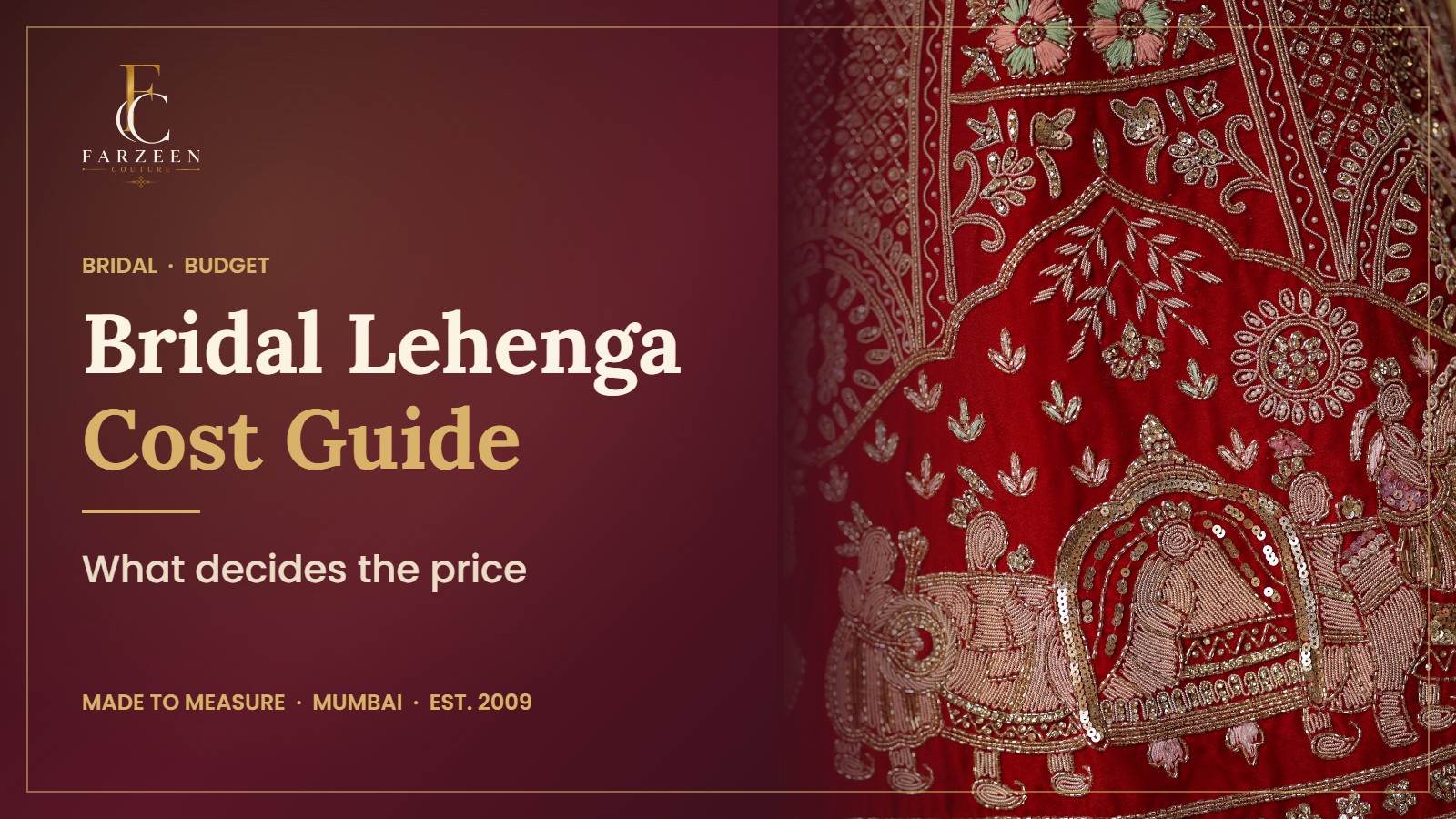
What a Custom Bridal Lehenga Costs in Mumbai
Bridal
By Farzeen Lala · Published
The first thing most brides ask is how much a bridal lehenga will cost, and the honest answer is that it depends. Two lehengas that look similar in a photograph can be very different pieces of work once you look at the fabric, the handwork and the hours behind them.
Because every outfit at Farzeen Couture is made to measure, there is no fixed price tag. The good news is that you make most of the choices that shape the final cost. This guide explains what those choices are, how they add up, and how to plan a budget you feel comfortable with before you sit down for your consultation.
Why a Custom Bridal Lehenga Has No Fixed Price
A ready-made outfit is priced once and sold many times. A custom bridal lehenga is designed, cut and embroidered for one bride, so its cost is built up from the decisions made with you. The colour, the amount of embroidery, the shape of the skirt, the blouse, the dupatta and any extra pieces all play a part.
That is why a quote comes after the design conversation, not before it. Once the atelier knows what you would like, it can explain exactly what the price covers. If you would like to see how an outfit moves from idea to finished piece, read how a couture outfit is made. As a guide, custom couture at Farzeen Couture starts from ₹25,000, and complex bridal and highly detailed couture is quoted after your consultation.
What Decides the Cost of a Bridal Lehenga
1. Handwork
Handwork usually matters most. Zardozi, dabka, pearl work, beading and crystals are all done by hand, one motif at a time, and the more of the outfit they cover, the more hours they take. A skirt embroidered from waist to hem costs more than one with detail only on the blouse and border. Dense, raised work also takes longer than a light, scattered pattern. Our guide to zardozi, dabka and beadwork explains each technique.
2. Fabric
Fabric comes next. Silk, velvet, net and organza are each priced differently, and a full bridal skirt needs a generous amount of fabric plus lining. If you want an exact shade, having the fabric dyed to match is another step in the process.
3. Silhouette and construction
The shape of the outfit adds up too. A can-can for volume, a cape, a long train or a structured, fitted blouse each take extra pattern-making, stitching and fitting. A simple A-line skirt needs less construction than a heavily flared one with panels.
4. Dupattas, veils and extra pieces
A second embroidered dupatta or a long cathedral veil is a separate piece of work, so each one adds to the total. The same applies to a matching potli, an extra blouse or a change of look for another function.
5. Timing
More handwork needs more time. Starting early lets the atelier plan the work without rushing, which is better for the quality of the outfit and gives you room for fittings and small changes.
Where Your Budget Shows Most
Not every part of a lehenga is seen equally. If you would like to make your budget count, it helps to know where people tend to look first.
The blouse: it sits closest to your face and appears in almost every photograph, so rich detail here is noticed.
The border and hem: a well worked border gives the whole skirt weight and finish, even if the rest is lighter.
The dupatta or veil: it frames you during the ceremony and in portraits, so its border matters.
The body of the skirt: all-over embroidery looks regal but is the biggest single use of handwork hours.
A balanced design, with rich work on the blouse, border and dupatta and a quieter skirt, often looks just as bridal in photographs while keeping the outfit lighter to wear.
How to Plan Your Bridal Lehenga Budget
A clear plan makes the consultation easier and helps you avoid surprises. Use this checklist before you get a quote:
Set a comfortable range for the lehenga itself, separate from jewellery, shoes and other outfits.
Choose your priorities. Decide which parts matter most to you, such as the blouse, the border or the veil, and put the money there.
Collect inspiration and note what you like in each picture: the colour, the embroidery or the shape.
Share your wedding date so the atelier can plan the handwork.
Ask what the quote includes, such as the dupatta, the lining, alterations and delivery.
Keep room for change. Small decisions made during design can add up, so it helps to know where you could adjust.
If your wedding has several functions, it is worth planning all your outfits together. Our guide to the Indian wedding dress code for every function can help you list what you need.
Making the Most of a Made-to-Measure Lehenga
One of the quiet benefits of a custom piece is that you only pay for what you choose. Instead of buying an outfit with embroidery in places you do not care about, you decide where the handwork goes. You can also ask for a dupatta that can be restyled later, or a blouse designed so it can be worn again with a different skirt or saree.
Because the lehenga is cut to your measurements, it should need far fewer alterations than an off-the-rack piece. And because you see the design and fabric before work begins, you know what you are paying for at every stage. You can explore the kind of work the atelier does on our bridal couture and Our Craft pages.
Questions to Ask at Your Consultation
A few direct questions make the quote easier to understand and compare. Ask which parts of the design take the most handwork hours, whether the dupatta and lining are included, how many fittings are planned, and what happens if you would like a change after the design is approved. Clear answers now mean fewer surprises later, and they help you see where a small change could bring the total closer to your plan.
Ordering from Outside Mumbai
Many brides plan from another city or another country. Every outfit is made in our Mumbai atelier and delivered worldwide, so the consultation can happen over a video call wherever you are. Measurements, design approvals and progress photos are shared on WhatsApp. Delivery options and any customs duties for your country are confirmed with your quote. Our worldwide orders page explains how it works.
Frequently Asked Questions
How much does a custom bridal lehenga cost in Mumbai?
There is no fixed price, because every lehenga is designed for one bride. The cost depends on the amount and type of handwork, the fabric, the silhouette and any extra pieces such as a second dupatta or a veil. You receive a clear quote after your consultation.
What makes a bridal lehenga more expensive?
Handwork usually has the biggest effect. Embroidery that covers the whole skirt, dense zardozi or heavy beading takes many more hours than detail on the blouse and border. Rich fabrics, a structured silhouette, a long train and extra dupattas also add to the total.
Can I get a bridal look on a smaller budget?
Yes. Put the richest handwork where it shows most, such as the blouse, the border and the dupatta, and keep the body of the skirt lighter. A focused design often looks just as bridal in photographs.
When should I ask for a quote?
Ask once the design has been discussed, so the quote reflects the real outfit. Bring a photograph of the look you like and your wedding date, and ask what the quote includes before you decide.
Does ordering from abroad change the price?
The outfit itself is made in the same way wherever you live. Shipping and any customs duties depend on your country and are confirmed with your quote.
Have It Made for You
A bridal lehenga should feel worth every choice you make. At Farzeen Couture, we explain the price clearly before you decide, so you know exactly where your budget goes. Share your inspiration and your date through Custom Made Now or message us on WhatsApp, or book a consultation in person or by video call.