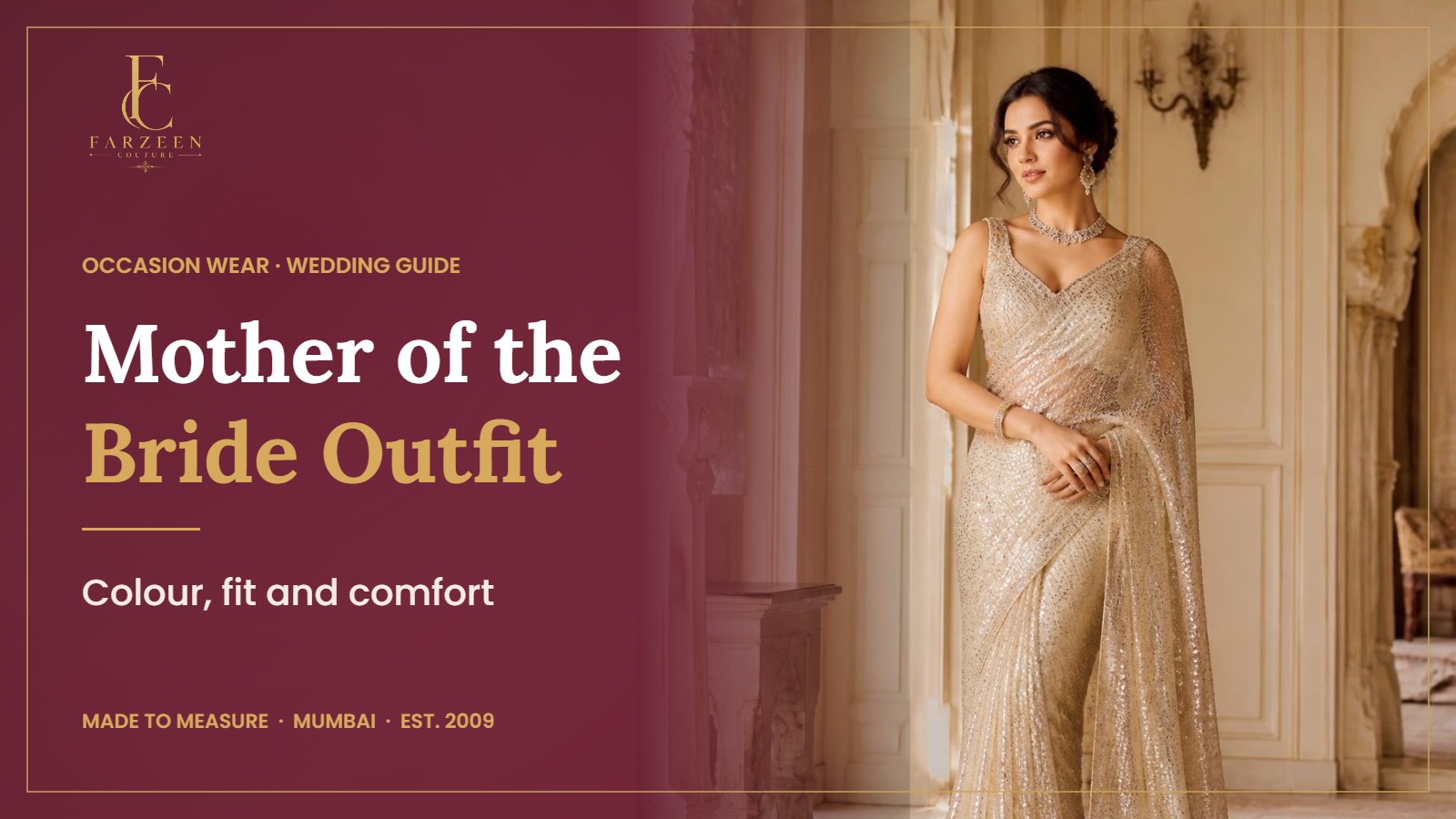
Mother of the Bride Outfit: An Indian Wedding Guide
Occasion Wear
By Farzeen Lala · Published
Your daughter is getting married, and everyone is asking what she will wear. Quietly, you are asking a different question: what will you wear? You want to look graceful and proud in every photograph, you want to match the family without competing with the bride, and you need an outfit you can stand, greet and host in from the first function to the last.
This guide walks through the mother of the bride outfit from start to finish: the right silhouette for each function, how to choose colours that sit well next to the bride, the fabrics and embroidery that stay comfortable over a long day, and a simple planning timeline so nothing is left to the last week.
What the Mother of the Bride Needs From Her Outfit
The mother of the bride has one of the busiest roles at an Indian wedding. You are welcoming guests, taking part in rituals, looking after the bride and posing for family photographs, often across several days. A good outfit for this role does four things.
Looks graceful: it should feel special and dignified, a clear step above guest wear.
Supports the bride: it complements her look in colour and shine rather than competing with it.
Lets you move: you will sit for rituals, bend to touch feet, hug relatives and walk a lot.
Lasts the day: weight, fit and breathability matter as much as beauty when you are dressed for many hours.
Keep these in mind as you plan, and you will find it easier to say no to a piece that looks lovely on a hanger but would tire you by the afternoon.
Choosing the Right Silhouette
There is no single correct outfit for the mother of the bride. The best choice depends on your comfort, your family's customs and the style of each function. These are the silhouettes most mothers consider.
The saree
A saree remains a favourite for the wedding ceremony itself. It is graceful at every age and suits rituals where you will sit and stand often. If you worry about managing pleats and pallu all day, a pre-stitched or pre-draped saree keeps the look with far less fuss.
The lehenga
A lehenga feels festive and grand, and many mothers now choose one for the sangeet or reception. A lighter skirt with embroidery focused on the blouse, hem and dupatta keeps it comfortable. Our guide to dupatta draping styles shows ways to wear the dupatta so your hands stay free.
The anarkali or long jacket
A floor-length anarkali or an embroidered long jacket over a skirt or straight pants gives a flowing, elegant line with plenty of coverage. It is a practical choice for mothers who prefer sleeves and an easy fit at the waist.
The sharara or palazzo set
A sharara or palazzo set is relaxed and modern, and lovely for the mehendi or a daytime function. Rich handwork on the kurta keeps it dressy enough for photographs.
The gown or Indo-Western look
For a cocktail evening or reception, some mothers choose a structured gown or a cape over a fitted dress. If you lean this way, our occasion wear collection shows the kind of shapes that can be made to your measurements.
A Mother of the Bride Outfit for Each Function
Most Indian weddings run over several functions, and each one has a different mood. A simple way to plan is to match the weight of the outfit to the formality of the event. Our wedding dress code guide covers each function in more detail; here is how it applies to the mother of the bride.
Mehendi and haldi: light, cheerful and easy to sit in. A soft sharara, a cotton silk kurta set or a light saree works well, in fabric you will not mind getting a little turmeric or henna on.
Sangeet: an evening of music and dance, so choose something that moves well and catches the light, such as a lighter lehenga or an anarkali. Our sangeet outfit ideas include more options for family.
Wedding ceremony: your most formal look. A rich silk saree or a regal lehenga with fine handwork, in a colour chosen to sit beautifully beside the bride.
Reception: evening glamour. A lehenga, saree gown or structured gown in a deeper or metallic tone suits stage lighting and photographs.
You do not need a completely new outfit for every small event. Many mothers invest in two or three key pieces for the main functions and style lighter outfits for the rest.
Colours That Complement the Bride
Colour is the question mothers ask most. The aim is to look connected to the bride in photographs without matching her exactly.
Start with the bride's outfit. Ask for the colour and a photo of her look for each function before you choose your own.
Choose a different shade from the same family, or a complementary tone. If she is in deep red, you might wear wine, rani pink, emerald or gold. If she wears pastel, a richer jewel tone helps you stand apart.
Avoid her exact colour. Wearing the same shade as the bride for the same function can look like a match rather than a family palette.
Coordinate with the groom's mother if you can. A quick conversation helps the two mothers look harmonious in shared photographs.
Check family customs. Some families have colours they prefer or avoid for certain rituals, so ask an elder before you finalise.
Think about light. Soft pastels and ivory glow in daylight, while jewel tones and metallics shine under evening lights.
Fabric, Embroidery and Comfort
The outfit you wear for ten hours needs to be planned differently from one you wear for two.
Fabric: pure silks and brocades suit the ceremony and drape with dignity. Georgette, organza and crepe are lighter and work well for evening functions and warm weather.
Embroidery: handwork such as zardozi, dabka and beadwork adds richness, but it also adds weight. Ask to feel a sample of the work before you decide.
Balance: keep the heaviest work on the blouse, border and dupatta, and keep the body of the skirt or saree lighter.
Sleeves and neckline: choose the coverage you are comfortable with. Elbow-length and three-quarter sleeves are popular with many mothers and look elegant in photographs.
Lining and closures: a soft lining, a comfortable waistband and an easy closure make a real difference by the end of the night.
A made-to-measure outfit can be cut around your shape and your preferences, so the fit stays comfortable when you sit, stand and greet guests for hours.
Your Planning Timeline and Checklist
Mothers are often so busy planning the wedding that their own outfit gets left until late. Custom handwork takes time, so start early. Timelines vary across the industry depending on the amount of embroidery, and the atelier confirms the timing for your outfit at the consultation. As a simple guide, use this checklist.
Once the bride's looks are decided: collect photos and colours of her outfits for each function.
Soon after: make a list of the functions you need outfits for, and decide which will be your two or three main looks.
Book a consultation: share your inspiration, the dates and your comfort needs. You can book a consultation in person in Mumbai or by video call.
Approve the design: confirm the silhouette, colour, fabric and embroidery placement.
Measurements and fittings: attend fittings, or follow guided self-measurement if you live abroad.
Final trial: try the outfit with your jewellery and footwear, and practise sitting, walking and climbing steps.
Before the wedding: pack each outfit with its blouse, dupatta, pins and accessories in a labelled cover.
Frequently Asked Questions
What should the mother of the bride wear to an Indian wedding?
Most mothers wear a silk saree or a regal lehenga for the wedding ceremony, and lighter outfits such as an anarkali, sharara set or lighter lehenga for the mehendi, sangeet and reception. Choose what feels graceful and comfortable for a long day.
Can the mother of the bride wear the same colour as the bride?
It is usually better to avoid the bride's exact colour for the same function. A different shade from the same colour family, or a complementary tone, looks connected in photographs while letting the bride stand out.
Is a lehenga suitable for the mother of the bride?
Yes. Many mothers choose a lehenga, especially for the sangeet or reception. A lighter skirt with embroidery focused on the blouse, border and dupatta keeps it elegant and easy to wear.
How early should the mother of the bride order her outfit?
Start as soon as the bride's outfits are decided, because custom handwork takes time. Timelines vary with the design and embroidery, so the atelier confirms the timing for your outfit at the consultation.
Can I order a made-to-measure outfit if I live outside India?
Yes. Consultations can happen over video call, you measure yourself with guidance, and the finished outfit is delivered to you. Our worldwide orders page explains how it works.
Have It Made for You
Your daughter's wedding is one of the proudest days of your life, and your outfit should feel just as special. At Farzeen Couture, every piece is designed with you and hand-made to your measurements in our Mumbai atelier, with the colour, coverage and weight planned around your role on the day. Share a photograph of your inspiration and the bride's looks through Custom Made Now, or message us on WhatsApp, and we will help you plan a look that sits beautifully beside your daughter.