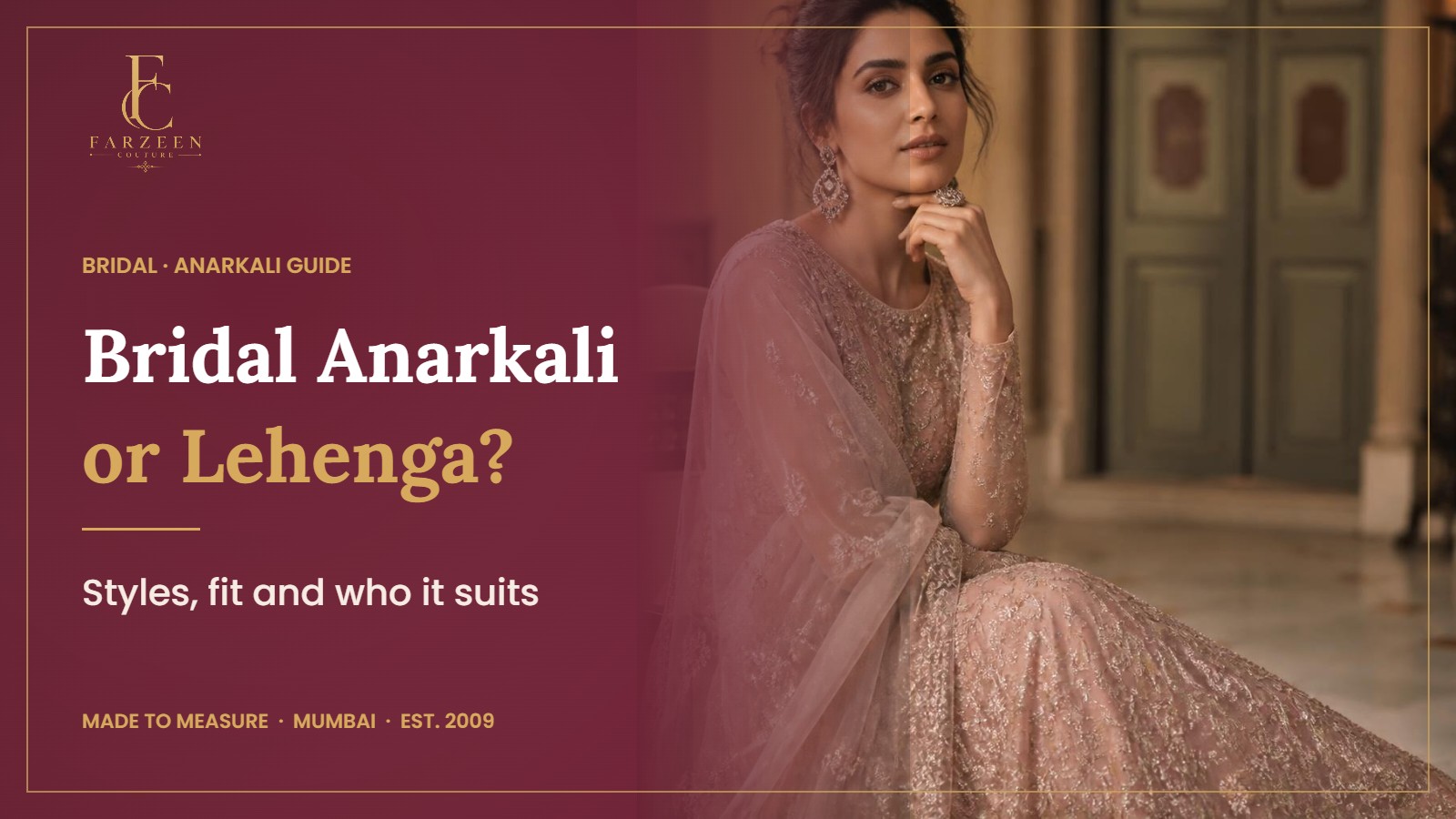
Bridal Anarkali vs Lehenga: Styles and Who It Suits
Bridal
By Farzeen Lala · Published
You have dreamed of a bridal lehenga for years, but now that the wedding is close, you keep pausing on pictures of floor-length anarkalis: one flowing silhouette, rich embroidery, and a look that feels regal without a heavy skirt. Is an anarkali "bridal enough"? Will it suit your height and your functions? And how does it really compare with a lehenga?
This guide answers those questions simply. You will learn what a bridal anarkali is, how it differs from a lehenga, the main styles to consider, who each one suits, and how a made-to-measure anarkali is designed so that it fits and moves the way you want on the day.
What Is a Bridal Anarkali?
An anarkali is a long, flared outfit with a fitted bodice that sits close to the upper body and then opens into a full, flowing skirt from the waist or just under the bust. It is usually worn with fitted churidar or straight pants underneath and finished with a dupatta. Because the bodice and skirt are one piece, it looks more like a gown than a suit.
The silhouette has deep roots. It is often traced to the peshwaj, a long, fitted-and-flared robe seen in Mughal court paintings and worn by noblewomen with fine jewellery and a veil. The name anarkali comes from a legendary court dancer, although historians are not sure she truly existed. Today the shape is a favourite for weddings across India, Pakistan and Bangladesh.
A bridal anarkali is simply that silhouette made for the bride: usually floor-length, in a richer fabric, with dense hand embroidery on the bodice, along the hem and often across the panels of the skirt, and paired with a statement dupatta or a veil.
Bridal Anarkali vs Lehenga: The Honest Difference
Both can look beautiful and both can be completely bridal. The difference is in structure, feel and the kind of picture you want to create.
Structure: a lehenga is three pieces, a skirt, a blouse and a dupatta. An anarkali is one long garment with pants underneath and a dupatta on top.
Silhouette: a lehenga skirt usually starts at the waist and can be very full, with the midriff often showing. An anarkali flows in one unbroken line from shoulder to floor, which creates a long, graceful shape.
Weight and comfort: heavy embroidery on a lehenga sits mostly on the skirt, around the waist. In an anarkali the weight is shared between the shoulders and the flare, which many brides find easier for long ceremonies. A very full anarkali can still be heavy, so fabric and lining choices matter.
Coverage: an anarkali covers the midriff and can be made with full sleeves and a high neck, which suits brides who prefer a more covered look or a cooler winter wedding.
Movement: anarkalis twirl beautifully, which is why they look so good in photographs and on the dance floor. Lehengas give more volume and drama when you stand still.
Rewear: an anarkali is often easier to wear again at a family wedding or festive dinner, with a lighter dupatta and different jewellery.
If you are still deciding on your main look, our guide to choosing the colour, embroidery and silhouette of your bridal lehenga walks through the same choices from the lehenga side.
Bridal Anarkali Styles to Know
"Anarkali" covers many shapes. These are the styles brides most often ask about.
Floor-Length Kalidar Anarkali
The classic bridal form. The skirt is made from many tapering panels, called kalis, stitched together so the hem flares into a wide circle. More panels give more flare and more places to place embroidery, so this is the most traditional and the most dramatic choice.
Jacket or Cape Anarkali
A fitted anarkali worn with an embroidered sheer jacket or cape over it. The outer layer adds richness and can be removed for the evening, so one outfit can serve two moods.
Gown-Style Anarkali
A softer, gown-like version where the flare is cut as one smooth skirt rather than many visible panels. It looks modern and works well for a reception or a cocktail evening.
Angrakha Anarkali
Here the bodice wraps across the front and ties at the side, in the angrakha style. It gives a softer neckline and a slightly vintage feel.
Front-Slit or Layered Anarkali
A contemporary option with an opening at the front over flared pants or a skirt, or with layered hems. It is lighter in feel and suits sangeet or mehendi functions more than the main ceremony.
Who Does a Bridal Anarkali Suit?
The honest answer is that almost any bride can wear an anarkali well when it is cut for her body. A few guidelines help:
Petite brides: a floor-length anarkali in one colour, with a high empire seam just under the bust, creates a long, unbroken line that adds height.
Tall brides: you can carry a very full kalidar flare, heavy borders and a long jacket without being overwhelmed.
Fuller busts: a natural waist seam with a structured, well-lined bodice gives support; avoid very high empire seams that can make the top look boxy.
Pear shapes: the flare skims the hips, so an anarkali is often more flattering than a lehenga skirt that starts at the waist.
Brides who want comfort: if you will be seated for long rituals or travel between venues, a lighter anarkali with soft lining may be kinder than a heavily layered skirt.
Fit is what makes the difference. The bodice must sit close without pulling, and the waist seam must fall exactly at the right point on your body. That is why made-to-measure matters so much with this silhouette, and why careful measurements taken at home are worth the effort if you are ordering from a distance.
How a Made-to-Measure Bridal Anarkali Is Designed
When an anarkali is made for you, these are the decisions you will make with the designer, usually in this order:
Function and mood: is this your main ceremony look, a nikah, a reception or a pre-wedding function? This decides how grand the outfit should be.
Silhouette and seam position: classic kalidar, gown-style, jacket or angrakha, and whether the seam sits at the natural waist or just under the bust.
Flare and length: how full the skirt should be and whether it should just touch the floor or have a slight trail.
Fabric: silk, velvet, georgette, net or brocade, often with a lining or can-can layer for shape. Our bridal fabric guide explains how each one feels and falls.
Neckline and sleeves: high neck, sweetheart, V or round; full, three-quarter or sheer sleeves.
Embroidery placement: on the bodice and yoke, along every kali, or concentrated on a deep border at the hem.
Dupatta or veil: a heavy bridal dupatta, a sheer veil, or a double dupatta, and how you plan to drape it.
Fittings: the bodice and seam are checked on your body, and the length is set with the shoes you will wear.
For timing, several months is typical in the industry for a heavily embroidered bridal outfit, and the atelier confirms the exact timeline at your consultation.
Styling Your Bridal Anarkali
A few simple choices bring the whole look together:
Jewellery: with a high neck, let earrings, a maang tikka or a passa lead and keep the necklace light. With a deep or sweetheart neckline, a layered necklace or choker can take centre stage.
Dupatta: a heavier dupatta draped over the head looks traditional; a sheer veil pinned at the back keeps the bodice embroidery visible. See our dupatta draping styles for ideas that work on anarkalis too.
Shoes: decide early and bring them to your fitting, because the hem length depends on them.
Hair: a low bun or braid keeps the line of a high neck clean; soft waves suit a deeper neckline.
Frequently Asked Questions
Can a bride wear an anarkali instead of a lehenga for her wedding?
Yes, a bride can wear an anarkali instead of a lehenga, and a floor-length bridal anarkali with rich hand embroidery and a statement dupatta looks just as bridal. Many brides choose it for its graceful line, extra coverage and comfort during long ceremonies.
Is a bridal anarkali heavier or lighter than a lehenga?
A bridal anarkali usually feels lighter around the waist because its weight is shared between the shoulders and the flare, while a lehenga carries most of its weight on the skirt. The final weight depends on the fabric, the lining and how much embroidery you choose.
What height suits a floor-length anarkali?
A floor-length anarkali can suit any height when it is cut to your measurements. Petite brides benefit from a single colour and a higher seam to lengthen the body, while taller brides can carry a fuller flare and a long jacket.
Which functions is a bridal anarkali best for?
A grand kalidar anarkali works for the main ceremony or a nikah, a gown-style anarkali suits a reception, and lighter slit or layered styles suit the sangeet or mehendi. The fabric and embroidery decide how formal the outfit feels.
Can I order a made-to-measure bridal anarkali from abroad?
Yes. Brides outside India can order a custom anarkali through a video consultation and measurements taken at home, with the design, fabric and embroidery agreed before work begins. Our worldwide orders page explains how this works.
Have It Made for You
If a flowing anarkali feels more like you than a lehenga, Farzeen Couture designs and hand-makes bridal anarkalis, lehengas and occasion wear to each client's own measurements at our atelier in Mumbai, for brides in India and around the world. Explore our bridal couture and women's couture, then share your idea through Custom Made Now, book a consultation, or message us on WhatsApp. We will talk through your silhouette, fabric and dates honestly before any work begins.