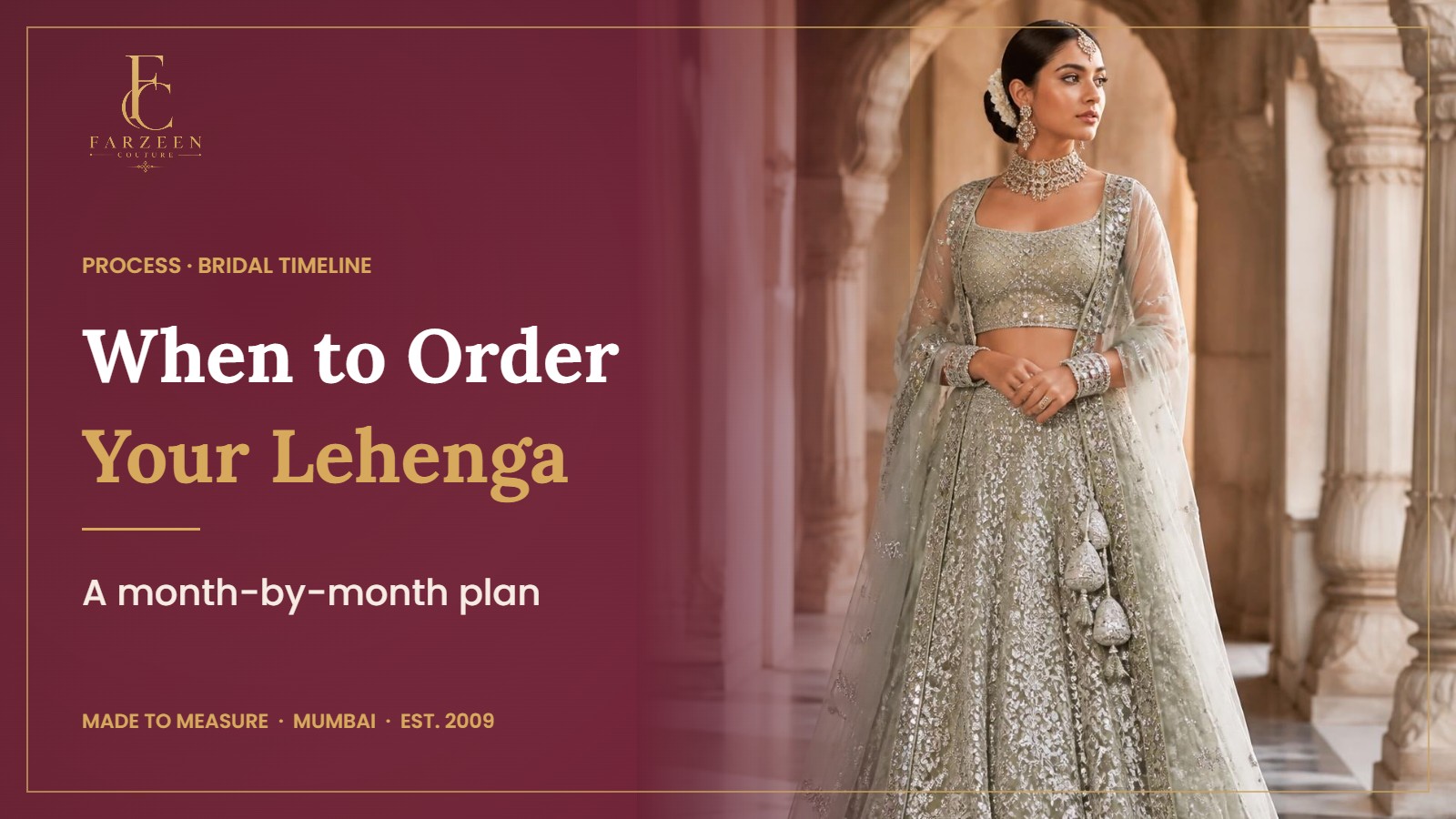
How Far in Advance to Order Your Bridal Lehenga
Process
By Farzeen Lala · Published
The wedding date is fixed, the venue is booked, and everyone keeps asking the same question: have you ordered your lehenga yet? You may not even be sure which month you should start, how long a hand-embroidered outfit really takes, or whether you have already left it too late.
The honest answer is that it depends on your design, but you can still plan with confidence. This guide explains how far in advance to order a bridal lehenga, what decides the timeline, and gives you a month-by-month plan you can follow, whether you live in Mumbai or are planning your wedding from abroad.
The Short Answer: Start Earlier Than You Think
For a made-to-order bridal lehenga with rich handwork, many couture houses in the industry suggest starting around six to nine months before the wedding. Lighter designs may need less time, and very detailed outfits may need more. At Farzeen Couture, every outfit is made to order, so we confirm your timeline at the consultation, once we know your design, before you place the order.
Starting early is not about rushing. It gives you room to think about the design calmly, to make small changes during the handwork stage, and to have the finished lehenga in hand well before the wedding week, when there is already too much to do.
What Decides How Long Your Lehenga Takes
A couture lehenga is not taken off a rail. It is designed, cut and embroidered for one person, so the time it needs comes from the choices you make. These are the factors that matter most.
Amount of handwork: embroidery is usually the longest stage. Zardozi, dabka, beadwork, pearls and crystals are placed by hand, one panel at a time, and an all-over design takes far longer than a lehenga with work only on the border and blouse.
Level of customisation: a design built from your own ideas, with a custom neckline, sleeves and placement of motifs, needs more time for sketching and approval than one based closely on an existing look.
Fabric and colour: if you want a shade matched exactly, the fabric may need to be dyed before any embroidery can start.
Fittings: time for at least one fitting, and any adjustments after it, needs to be built into the plan.
Number of outfits: if you are ordering for several functions, or for family members too, plan for each piece rather than only the wedding lehenga.
Season and location: the winter wedding months are the busiest time of year for most ateliers, and brides overseas need to allow time for shipping and customs.
If you are still deciding on the design itself, our guide to choosing the colour, embroidery and silhouette of your bridal lehenga will help you arrive at the consultation with clearer ideas, which keeps the design stage moving.
Your Month-by-Month Bridal Lehenga Timeline
Use this as a planning guide, not a strict rule. Count back from your main wedding date and adjust once your atelier confirms the timeline for your design.
9 to 12 months before: gather ideas. Save photographs of lehengas, necklines, sleeves and borders you love. Note the colours you are drawn to and the ones you want to avoid. List every function you need an outfit for and set a rough budget.
8 to 9 months before: book your consultation. Visit the atelier or book a consultation by video call. Share your inspiration, talk through silhouettes and agree on the direction of the design.
7 to 8 months before: approve the design and order. Review the sketch, ask for changes until it feels right, and confirm fabric, colour and budget. Production begins only after you approve.
6 to 7 months before: measurements. Attend your measuring session or send your measurements following the atelier's guide. Try to measure at the weight and shape you expect to be at on the day.
3 to 6 months before: handwork. This is when the embroidery happens. Follow the progress photographs and raise any questions early, while changes are still easy.
2 to 3 months before: fitting. Try the lehenga on, walk, sit and turn in your wedding shoes, and check the weight of the dupatta. Small adjustments are made after this.
6 to 8 weeks before: final outfit in hand. Aim to have the finished lehenga with you by now, so jewellery, hair and make-up trials can be planned around the real outfit.
Each of these stages is explained in more detail in our guide to how a couture outfit is made, from first inspiration to final delivery.
Planning for the Winter Wedding Season
Many Indian weddings are held in the cooler months, and the auspicious dates in that season fill quickly. If your wedding falls in the peak winter months, ateliers, embroidery artisans, tailors and couriers are all at their busiest at the same time.
That is why brides with a winter wedding often begin even earlier, so the design is approved before the rush starts. If your wedding is in the next few months, do not panic. Book a consultation as soon as you can, be ready to make decisions quickly, and ask which parts of the design affect the timeline most.
Ordering from Abroad? Add Extra Time
Many brides in the UAE, the UK, the USA and Canada order their bridal lehenga from Mumbai. The process works well over video calls, but a little extra time keeps it relaxed.
Consultations: plan calls around the time difference, and allow a few extra days for back-and-forth on the sketch.
Measurements: follow the measurement guide carefully, ideally with help from someone at home, and confirm any figure you are unsure of.
Fitting: decide early whether you will travel to Mumbai for a fitting or have final adjustments done near you.
Shipping and customs: international delivery and customs clearance can add time, so aim to receive the lehenga well before you fly to the wedding, or before guests arrive.
Our page on worldwide orders and the guide to ordering couture from abroad explain video consultations, measurements and delivery step by step.
What Happens If You Order Late
Ordering close to the wedding is not always impossible, but it changes what you can choose. With less time, the atelier may suggest lighter or more focused embroidery, a fabric that is ready to work on rather than custom dyed, or fewer design changes once the sketch is approved. There is also less room for a second fitting if something needs adjusting.
If you are short on time, these steps help:
Decide fast: arrive at the consultation with clear inspiration and a fixed budget.
Focus the handwork: put the richest embroidery on the blouse, border and dupatta, where it shows most in photographs.
Prioritise the main look: secure the wedding lehenga first, then plan outfits for the other functions.
Ask directly: the atelier will tell you honestly what is achievable in the time you have.
Time also affects cost. Our guide to what a custom bridal lehenga costs in Mumbai explains how fabric, handwork and design choices shape the final price.
A Simple Bridal Lehenga Planning Checklist
Fix the wedding date and list every function you need an outfit for.
Count back from the main wedding date and mark your target order month.
Save inspiration photographs, including details you love and dislike.
Set a budget for the bridal lehenga and for the other outfits.
Book a consultation in person or by video call.
Approve the sketch, fabric and colour.
Complete your measurements.
Note your fitting date in the diary.
Plan to have the finished outfit with you six to eight weeks before the wedding.
Book jewellery, hair and make-up trials once the lehenga is ready.
Frequently Asked Questions
How far in advance should I order a bridal lehenga?
For a made-to-order lehenga with detailed handwork, many couture houses in the industry suggest starting around six to nine months before the wedding. Simpler designs can need less time. Because every Farzeen Couture outfit is made to order, we confirm your timeline at the consultation, once your design is clear.
Can I order a bridal lehenga three months before the wedding?
Sometimes, depending on the design and the atelier's schedule. With less time you may need lighter or more focused embroidery and fewer changes after the sketch is approved. Book a consultation quickly and ask what is achievable for your date.
When should I give my measurements?
Usually after the design is approved, so the outfit can be cut to fit you. If you expect your body to change before the wedding, mention it at the consultation, because the fitting stage allows for adjustments.
Does ordering from abroad take longer?
The making of the lehenga follows the same steps, but you should allow extra time for video consultations across time zones, shipping and customs. Plan to receive the outfit well before you travel for the wedding.
Should I order my other wedding outfits at the same time?
It helps to plan them together, so colours and styles work across every function. Many brides confirm the main wedding lehenga first and then order outfits for the mehendi, sangeet and reception soon after.
Have It Made for You
The best time to start is as soon as your wedding date is fixed. Share your inspiration with us, and we will design a lehenga made to your measurements and confirm a timeline that fits your date. Explore our bridal couture, tell us your ideas through Custom Made Now, or message the atelier on WhatsApp to begin.