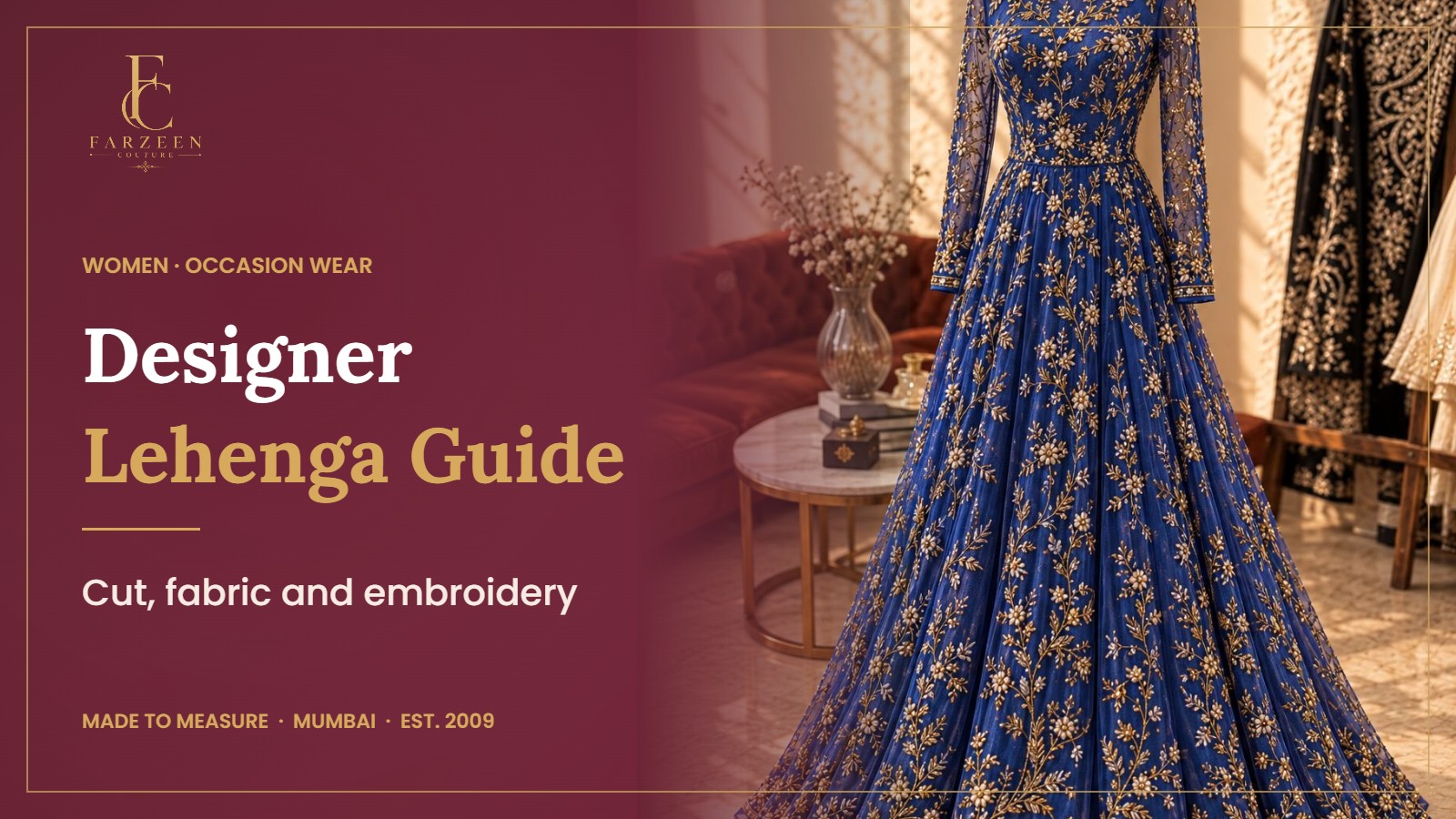
Designer Lehenga for Women: How to Choose Yours
Women
By Farzeen Lala · Published
Your sister's wedding is coming up, or your closest friend's, and you want to look beautiful without competing with the bride. You search for a designer lehenga and find hundreds of styles, but no clear way to know which one will suit you, feel comfortable for hours, and still look right in the photographs. This guide gives you a simple way to choose: start with the function, then the silhouette, fabric, embroidery weight and fit.
What Makes a Lehenga "Designer"
A designer lehenga is one where the colour story, the cut and the embroidery have been planned together by a designer, not just put together from standard parts. You can feel the difference in the details: the way the border sits on the hem, how the blouse neckline frames the face, and how the dupatta finishes the whole look.
There are two broad ways to buy one:
Off the rack: a finished piece in a standard size, altered afterwards if needed. Quick, but the colours, fabric and embroidery are already fixed.
Custom or made to measure: the lehenga is designed and stitched for you, from your own measurements. You choose the shade, the fabric, how heavy the work is and the blouse design, so it fits your body and your function.
If you want a lehenga that feels like yours and fits well from the first wear, made to measure is worth considering. Our guide to couture vs ready-to-wear explains the honest trade-offs.
Start With the Function
The same lehenga can look perfect at a sangeet and too heavy at a morning puja. Before you think about colour, ask where and when you will wear it.
Mehendi and haldi: light fabrics, easy movement, bright or pastel shades and lighter work. You will be sitting, dancing and hugging people.
Sangeet: this is where a designer lehenga shines. Flared skirts, mirror work, sequins and bolder colours all look lovely under evening lights. See our Coral Sangeet Lehenga for a festive but wearable example.
Wedding ceremony: rich colour and fuller embroidery, but stay clear of the bride's main colour. If the bride is wearing red, choose jewel tones, pastels or deep neutrals instead.
Reception: evening, often glamorous. Metallic work, darker shades and sleek silhouettes such as our Charcoal and Gold Lehenga feel right here.
For a full guide to what each event usually asks for, read Indian wedding dress code for every function.
Choose a Silhouette That Suits You
The silhouette is the shape the skirt makes. It changes how you look and how easily you move.
A-line: fitted at the waist and gently flared. It flatters almost every body type and is easy to walk in.
Flared or circular: a full skirt with many panels (kalis). Beautiful for dancing at a sangeet, but uses more fabric and can feel heavier.
Mermaid or fishtail: fitted through the hips and flaring near the knee. It looks striking at a reception and suits you if you are happy in a closer fit.
Jacket or cape lehenga: a lehenga with a long jacket or cape instead of, or as well as, a dupatta. Good for winter evenings and for anyone who prefers more coverage. Our Blush Pink Jacket Lehenga shows how soft this can look.
Straight or panelled: a slimmer skirt that feels modern and is easy to carry through a long day.
If you are petite, a slim border and vertical patterns help you look taller. If you are tall, wide borders and horizontal motifs look balanced. At a fitting, these choices are made against your own measurements, not a standard size chart.
Fabric: Comfort Comes First
The fabric decides how the lehenga falls, how warm it feels, and how much embroidery it can carry.
Georgette and chiffon: light and flowing, good for day functions and warm weather.
Net and organza: sheer and airy, they let embroidery stand out without too much weight.
Raw silk and dupion: hold their shape well and look rich in photographs.
Velvet: deep and warm, lovely for winter evening weddings.
Banarasi brocade: a woven fabric with its own pattern, so it looks festive even with very little handwork. Read our Banarasi brocade guide to learn more.
Our lehenga fabric guide compares each fabric by season and weight.
How Heavy Should the Embroidery Be?
As the sister, friend or guest, you want to look special but not overshadow the bride. A simple rule is to choose one area to make heavy and keep the rest lighter.
Light work: scattered motifs, thread work or a fine border. Best for day functions and when you will be busy hosting.
Medium work: a richer border, a worked blouse and motifs on the skirt. This suits most sangeet and wedding looks.
Heavy work: dense zardozi, dabka, sequins or beadwork across the skirt. Save this for the reception or the wedding night, and plan for the extra weight.
Heavy embroidery adds weight, and so does a stiff can-can underskirt. If comfort matters to you, ask for lighter fabric under the work, a softer lining, or embroidery placed mainly on the border and blouse. Learn more about the techniques in our short guide to zardozi, dabka and beadwork.
Colour, Blouse and Dupatta
Colour
Ask the bride, or her family, what colours she is wearing for each function. Then choose a shade that sits well beside hers in photographs. Jewel tones such as royal blue, emerald and wine look rich at evening events, while pastels such as sage, powder blue and blush feel fresh in daylight. Our Royal Blue Floral Lehenga is a good example of a strong colour that does not compete with a red bride.
Blouse
The blouse is the part of the lehenga closest to your face and the part most people notice. Think about the neckline, the sleeve length and the back design together, and match them to the jewellery you plan to wear. Our guide to lehenga blouse back designs has ideas you can take to your fitting.
Dupatta
A sheer dupatta keeps the look light; a heavier, bordered dupatta adds drama. Decide how you will drape it before the embroidery is planned, so the border shows where it matters.
Your Designer Lehenga Checklist
List every function you need an outfit for, with the time of day and venue.
Ask the bride about her colours and any family colour themes.
Choose a silhouette you can sit, walk and dance in for several hours.
Pick the fabric to suit the season and the venue.
Decide the embroidery weight: light, medium or heavy.
Plan the blouse and dupatta together with your jewellery.
Book your consultation early, so there is time for fittings before the wedding.
Timelines for custom lehengas vary across the industry depending on the design and the amount of handwork. The atelier confirms your timing at the consultation, so it helps to start early.
Frequently Asked Questions
What is the difference between a designer lehenga and a custom lehenga?
A designer lehenga is designed with a planned colour story, cut and embroidery, while a custom lehenga is also made to your own measurements and choices. A custom designer lehenga combines both: the design is created for you, and it is stitched to fit your body rather than a standard size.
Can I order a custom designer lehenga from Mumbai for a wedding abroad?
Yes, you can order a made-to-measure lehenga from Mumbai for a wedding in another country. The design is discussed over a video consultation, you send your measurements, and the finished lehenga is shipped to you. Our guide to ordering couture from abroad explains each step.
What colour lehenga should the bride's sister wear?
Choose a colour that sits well beside the bride's outfit without matching it. If she wears red, jewel tones, pastels or deep neutrals work beautifully. It is always kind to ask her first.
How can I make a heavy lehenga more comfortable?
Ask for a lighter base fabric, keep the heaviest work on the border and blouse, and choose a softer lining or a lighter can-can. A made-to-measure lehenga can be planned for comfort from the start.
What decides the cost of a designer lehenga?
The main factors are the fabric, the amount and type of hand embroidery, the number of panels in the skirt, and the time the work takes. A consultation is the best way to understand the cost of your own design.
Have It Made for You
At Farzeen Couture, every lehenga is designed and hand-made in our Mumbai atelier to your own measurements, for clients in India and around the world. Browse our women's couture and occasion wear for ideas, then tell us about your function through Custom Made Now or message us on WhatsApp. We will help you choose the silhouette, fabric and embroidery that feel right for you.